
Visiting a stunning tropical island in the middle of the ocean has its tradeoffs, and a risk of earthquakes and tsunamis is one of them.
However, don’t let anyone scare you and ruin your excitement about your trip to the Island of Gods.
While it is true that Bali has a high seismic activity, just as other islands in Indonesia, it is also true that most of that activity is completely unnoticed by locals and tourists.
Here is your full guide to understanding how Bali earthquakes work, why they happen, and what you should know to stay safe.
Summary: Bali Earthquakes Awareness At A Glance
In recent years, monitoring equipment has recorded hundreds of earthquakes around Bali each year, but most of them go unnoticed and have no aftershocks, as they are extremely small and far offshore.
In the event of an earthquake, visitors may feel a slow, rolling motion, and some vibration. Move closer to the ground and under cover.
Follow the BMKG Twitter (X) account to get alerts of all earthquakes happening around Bali, Lombok, and neighbouring islands and information of tsunami potential.
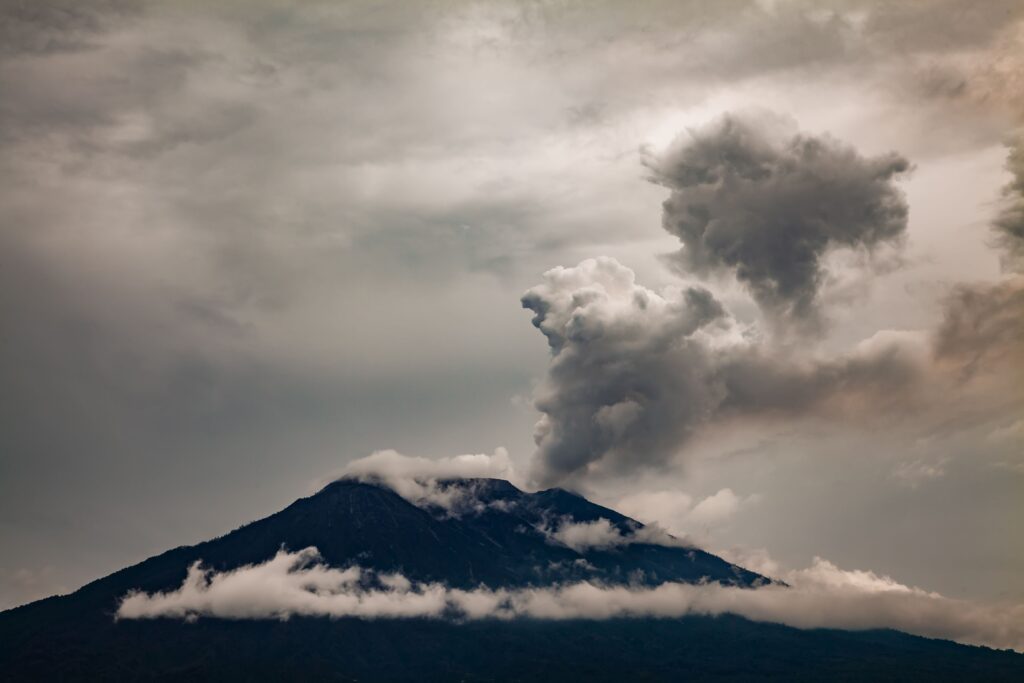
You may also want to monitor volcanic activity, as Bali has two active volcanoes (Mt Agung and Mt Batur) and larger earthquakes can trigger a volcanic eruption, too.
What Is An Earthquake?
An earthquake is the sudden shaking of the ground when pressure under the Earth’s surface is released. This happens where massive pieces of Earth’s crust, called tectonic plates, push against each other.
When that pressure is released, energy travels through the ground in waves. What we feel as shaking is simply the surface responding to those waves.
In Bali, earthquakes often feel like a slow sway or rolling motion, the mainshock. Many people describe it as someone nudging the bed lightly or a truck passing by very close. Sometimes, you can also feel aftershocks after the first wave of shaking is over.
Most earthquakes here last just a few seconds. Often, by the time we realise what’s happening, it’s already over!


Are Earthquakes Common In Bali?
Yes. Bali is part of Indonesia, which lies on the Pacific Ring of Fire — one of the most active seismic zones in the world. This means, Bali has active volcanoes, tsunami potential, landslides, and earthquakes.
In the past years, according to the official earthquake data, there were between 300 and almost 600 earthquakes per year, with the absolute majority of them being super mild, with magnitudes below 3.0.
Most quakes occur south of Bali in the ocean. The deeper and farther their epicentres are, the less shaking we feel on land.
In 2025, there were 547 earthquakes reported by the Indonesian Meteorology, Climatology, and Geophysics Agency, but if you ask expats and locals living in Bali, they will most likely remember only a couple. So while the seismic activity is present, it doesn’t disrupt daily life or Bali holiday plans.
Why Does Bali Have Earthquakes At All?
Simply put, Bali and neighbouring islands, sit in a part of the world where the Earth is constantly moving.
Beneath the island, enormous tectonic plates are slowly shifting against one another. The Indo-Australian Plate pushes beneath the Eurasian Plate in a process known as subduction. Over time, pressure builds up along this boundary, and when it releases, an earthquake occurs.
It doesn’t only happen on land, it can happen in the ocean (and Bali Sea), too!
Indonesia, and Bali along with it, lies along the Pacific Ring of Fire stretching from Japan and the East Coast of the USA to New Zealand. One of the major earthquake activities happens along the horseshoe-shaped Sunda Strait between Java and Sumatra, but aftershocks are often felt in Bali.
It’s a region known for volcanoes, earthquakes, and dramatic landscapes. Mt. Agung rising above the island is a visible reminder of that geology. The occasional tremor beneath your feet is another.
Australia, for example, isn’t part of this seismic region.
When Did The Latest Earthquake Hit Bali?
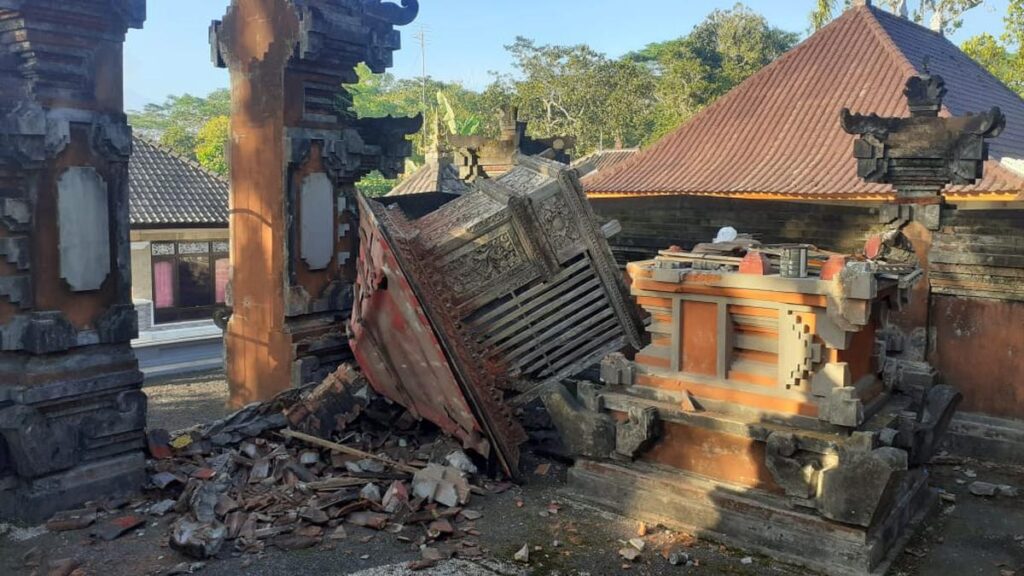
If you are speaking about mild quakes that most residents don’t even feel, they may happen every day somewhere near Bali.
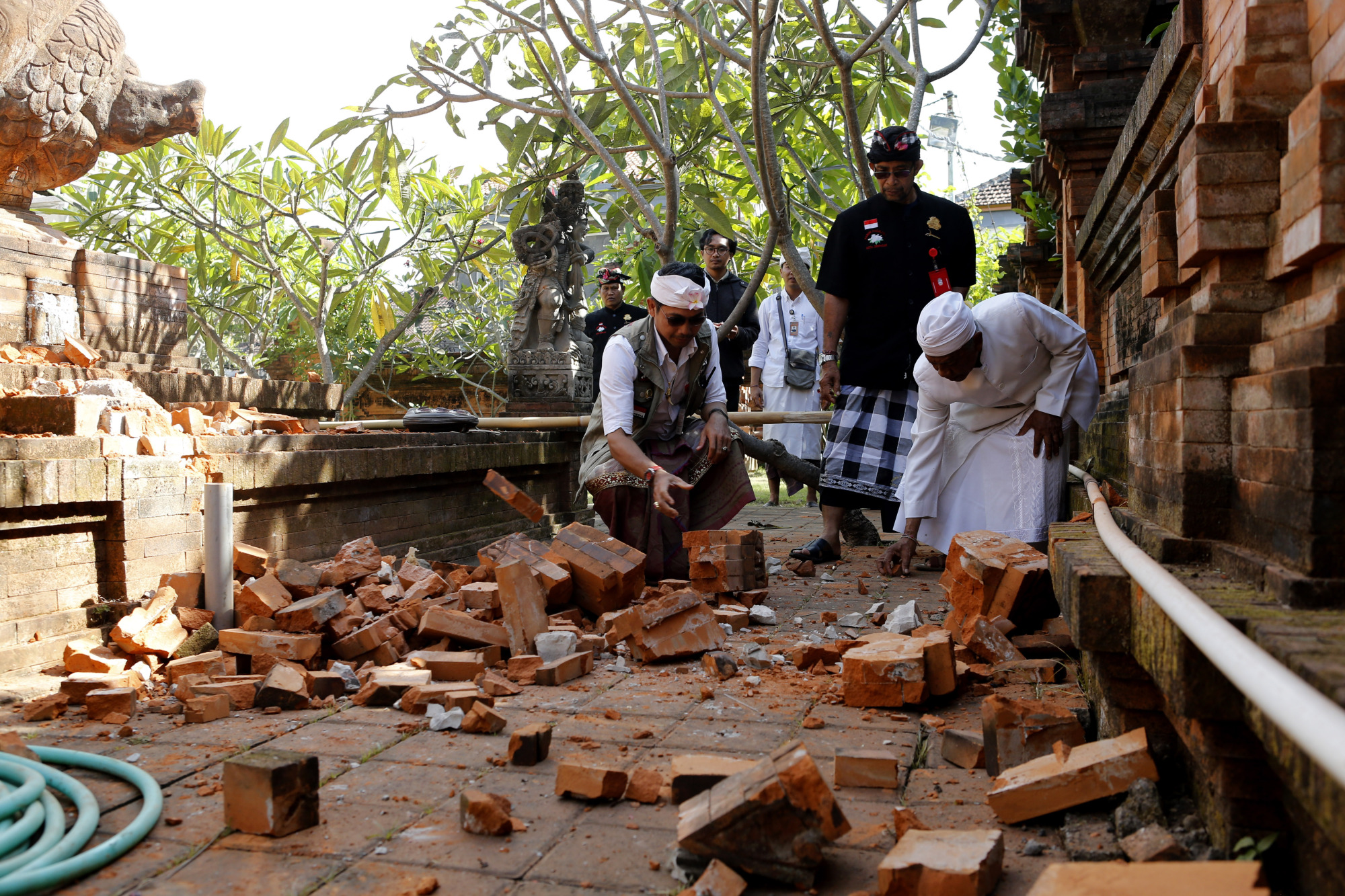
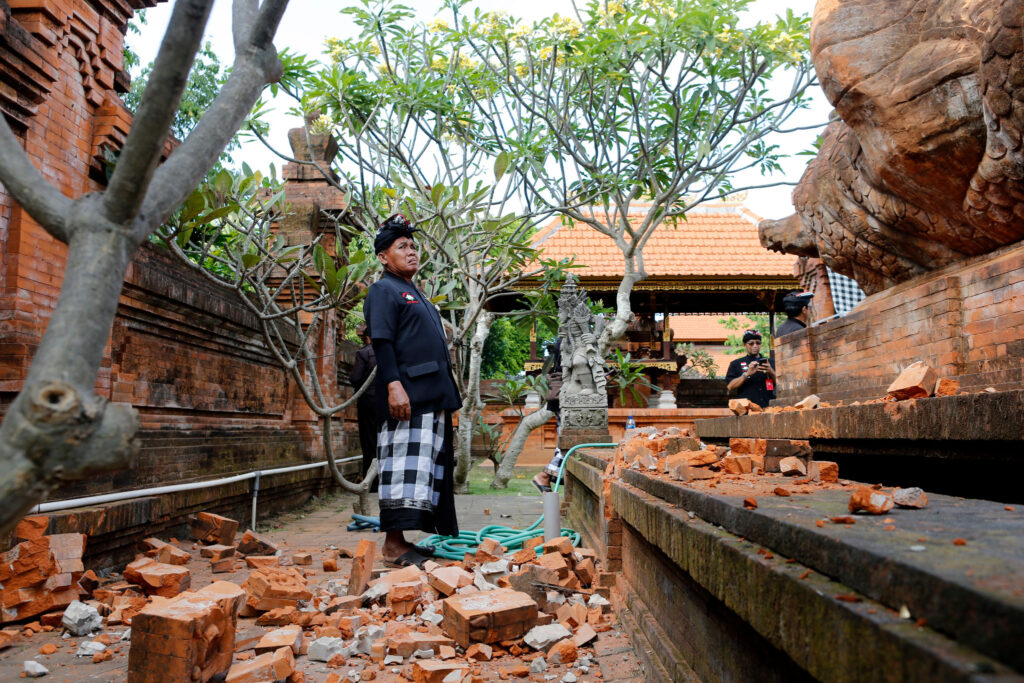
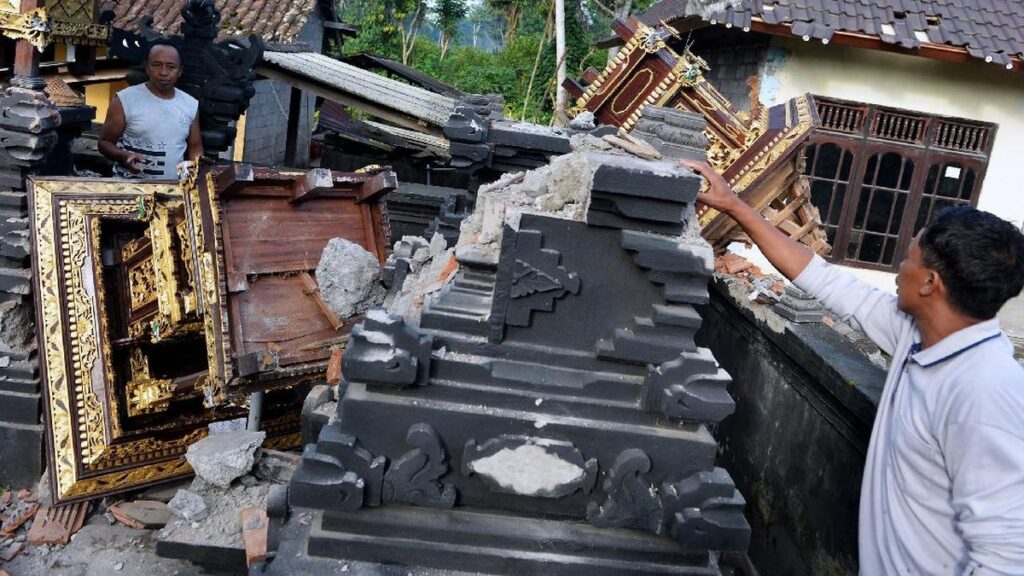
However, the latest earthquake that caused significant damage and became historic was the Gianyar and Ubud earthquakes in September 2024 of 4.8-4.9 magnitude.
A historic earthquake of 9.4 magnitude in Sumatra and Aceh, in December 2004, took a total number of more than 250,000 but Bali wasn’t affected. In January 2004, however, there was a magnitude 6 hit in Karangasem taking 33 lives.
If you dig through historical records to get to one of the biggest earthquakes in Bali, you will find the Seririt earthquake in July, 1976 (magnitude 6.5).
Seririt caused serious damage: pretty much all housing in Tabanan, Buleleng, and Jembrana (West and North) was destroyed, many people were injured and some, unfortunately, passed.
An even larger earthquake happened in November 1815, reaching an estimated magnitude of 7, and triggered a tsunami that caused more than 10,000 deaths on the northern coast and in Tabanan.
Will Bali Earthquake Trigger A Tsunami?
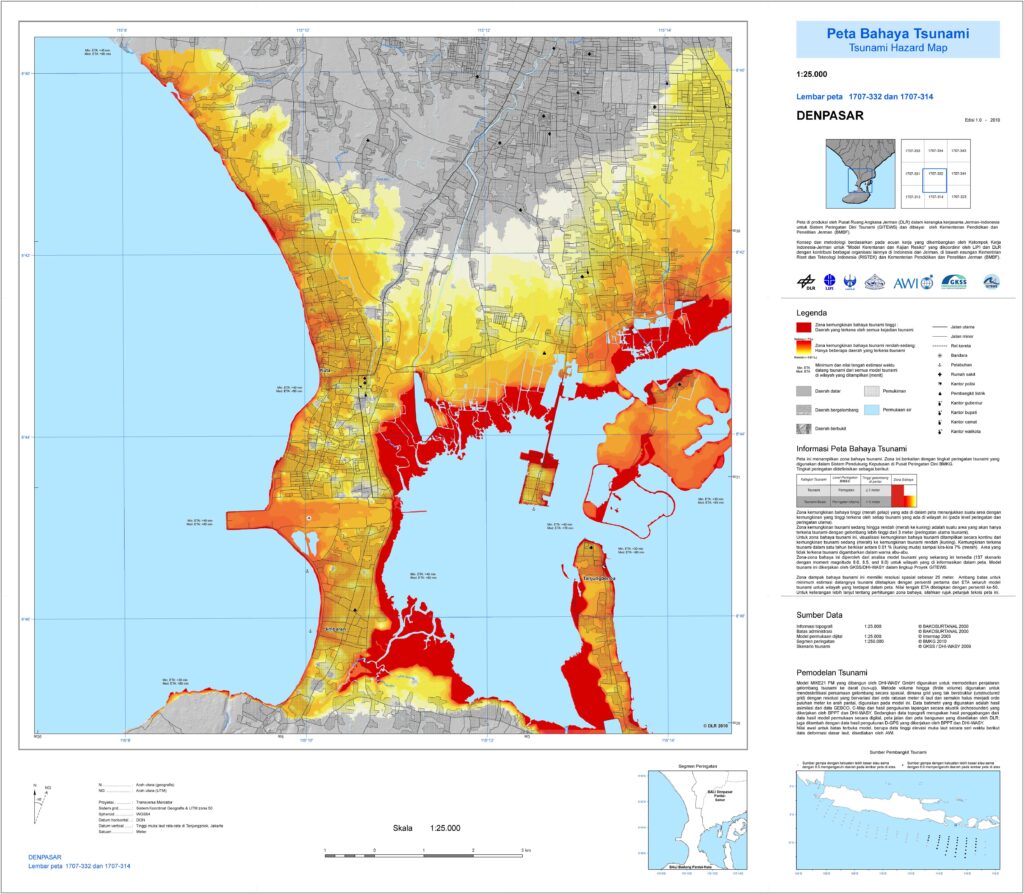
In theory, yes, a huge earthquake can cause a tsunami. In reality, though, most earthquakes around Bali cannot cause one as they are too weak.
The latest registered tsunami in Bali happened around 1977/1978 and some hotels and businesses along the Benoa beach (Tanjung Sari) were washed away and in 1994, coming from East Java. Since then, no tsunamis, despite 500+ earthquakes per year, have been detected in Bali.
A tsunami requires a very specific set of conditions: a strong, shallow earthquake under the sea that causes vertical movement of the ocean floor. Most earthquakes near Bali are either too weak, too deep, or located in areas that don’t produce that kind of movement.
However, necessary safety measures are in place and you will see maps and navigation signs at most beaches around Bali in case of a tsunami.
Bali’s Early Warning Systems
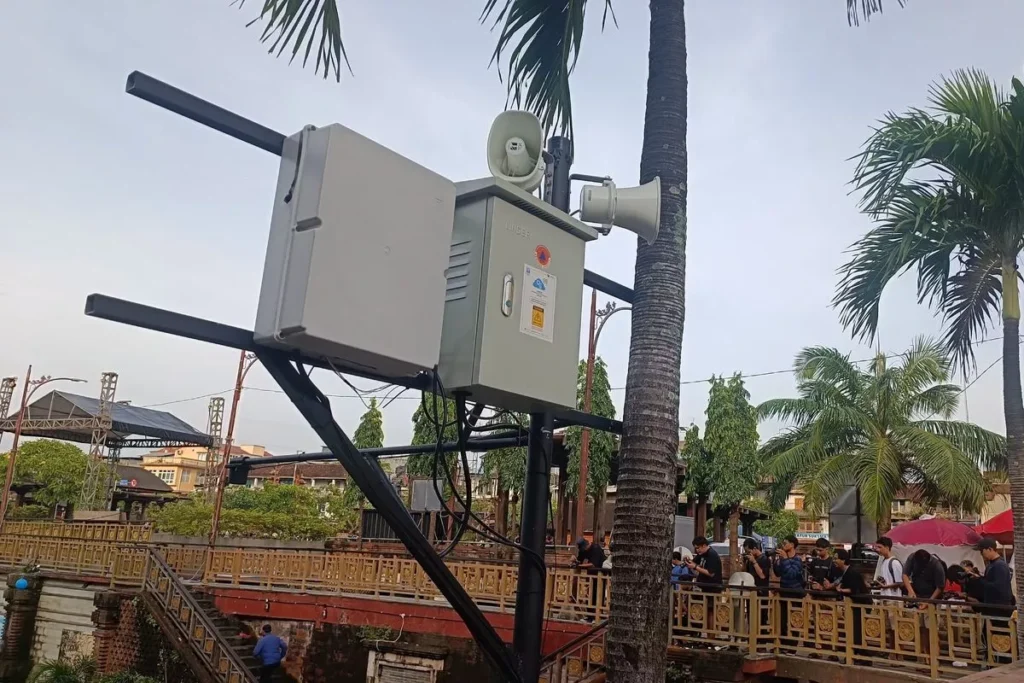
Indonesia has a well-developed monitoring system for earthquakes, tsunamis, and any potential natural disasters.
The country’s meteorological agency, BMKG, tracks earthquakes in real time and quickly releases information about their strength, depth/distance, and whether there is any tsunami risk.
Bali Tsunami Early Warning System (B-TEWS), which was introduced after the 2004 earthquake, has sirens in places like Seminyak, Sanur, Kuta, and Tanah Lot ready to alert the public in the case of a real emergency.
Each fishing village also has a special warning system that local authorities regularly test.


How To Stay Safe During An Earthquake In Bali, Indonesia
No matter where you are, the key to staying safe is to stay calm.
Before travelling, make sure to have your travel insurance information easily available (and covers natural disasters), and save the general emergency number for Indonesia: 112.
If You’re Indoors

Simply stay put, maybe get lower to the ground and don’t try to run and don’t panic.
Most people hurt themselves as they actually try to run or pack but can’t balance themselves when shaking starts.
You can hide under a solid table, not the doorway, and protect your head and neck with your arms above it. Once safe, you can leave the house.
You can start quietly counting the seconds of how long the shakes last. If it lasts under 20 seconds, you should not even be concerned about a tsunami.
If you are staying in a hotel, they usually have warning systems and protocols in case of emergencies, so just listen to the alerts. Do not use elevators.
If You’re On The Beach

Tourists are worried about a tsunami when they are hit by an earthquake close to the beach.
Same rules apply, stay put, low to the ground and start counting. If the shaking stops fast, continue enjoying your day!
If You’re Driving

Immediately stop, if you feel a bigger earthquake. Get off the bike and stay low. If you were in the car, it would be better to stay in the car, just park on the side of the road, not in the middle.
If possible, stay at a distance from the bike, power lines, or big trees.
However, truth be told, as most earthquakes in Bali are weak and mild, you most likely won’t even know one happened while you were driving.


FAQs
Was Bali Affected By The 2025 Earthquake?
In 2025, Bali experienced hundreds of tiny earthquakes but there was no severe damage or deaths. No tsunamis were registered in the Bali region in 2025 as well.
The biggest earthquakes in Bali in 2025 were two quakes in September, closer to the East Coast and in the Bali Sea with magnitudes of 5.3 and 6, respectively.
Is Bali At Risk Of Tsunamis?
Technically, yes, as any island located in the seismic zone, Bali is at risk of tsunamis.
However, a tsunami requires a very specific set of conditions: a strong, shallow earthquake under the sea that causes vertical movement of the ocean floor.
Most earthquakes near Bali are either too weak, too deep, or located in areas that don’t produce that kind of movement. So once the shaking stops, no tsunami is coming.
Final Thoughts On Bali Earthquakes
Most of the earthquake tremors reaching Bali have epicentres too far away to cause any damage or trigger a tsunami, so visitors can safely plan a vacation and hope for an uneventful stay on the island.
What matters is awareness and your ability to handle panic. If you know what can happen and what fear is unreasonable, you are already halfway there!
Make sure to pay for your travel insurance and if you’re very concerned about earthquakes and tsunamis, simply stay in areas outside the tsunami reach!