If the only thing that haunts you about your firand st trip to Bali is the language barrier, you have to read this quick guide on the Bali language as we clear out some misconceptions.
Being a part of a massive country, Bali has, of course, adopted the official language – Indonesian. However, the island of the Gods also has its own charming language that is more than just a means of communication.
If you’ve never heard about the Bali language and want to know what language you can speak in Bali (and if you can get by with just English), keep reading!
What Language Is Spoken In Bali?
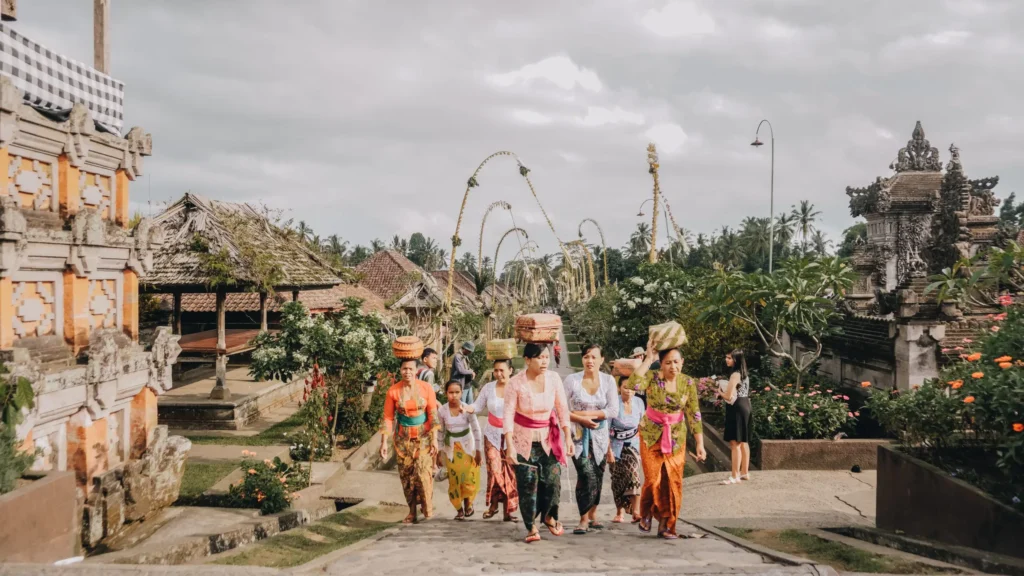
The two main languages used in Bali are Bahasa Indonesia and Bahasa Bali (or Basa Bali, as locals often call it).
The word“Bahasa” simply means “language”, so Bahasa Indonesia is the Indonesian language and Bahasa Bali refers to the local Balinese language.
Bahasa Indonesia is the official language of Indonesia, so you will hear it everywhere, at shops, restaurants, cafes, schools, offices and even on signs.
Balinese on the other hand is the island’s native language most kept in Hindu villages. It is still used at home, in villages, and especially during ceremonies at temples. You won’t find it on Google Translate!
The two languages are quite different in both writing and pronunciation, but if you want to have a few universally understood words, choose Bahasa Indonesia.
Most locals grow up learning both languages and naturally switch between them depending on where they are and who they are talking to.
Key Phrases To Remember in Bahasa Indonesia & Bahasa Bali
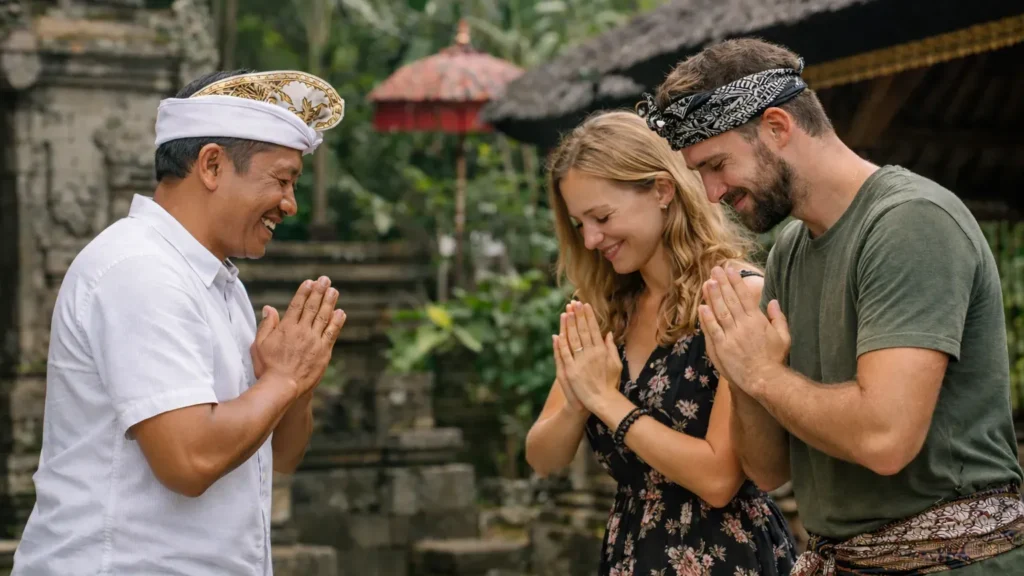
You don’t need to speak the local language fluently but knowing some phrases makes the interactions smoother and brings a smile to the locals’ faces.
Key Balinese Phrases In Bali Language
- Om swastiastu: Hello!
- Suksema: Thank you. To give you an idea of how different the Balinese language is from Indonesian, remember that thank you in Indonesian is terima kasih!
- Matur suksma: Thank you very much
- Suksema mewali: You’re welcome
- Ampura: Sorry / Excuse me
- Demen metepuk jak ragane: Nice to meet you!
- Kenken kabare: How are you?
- Becik becik: I’m good/I’m fine
- Aji kuda nika: How much is it?
Even just learning and using a few of these in your conversations can make a huge difference in how locals respond.


However, these phrases will be appropriate only in traditional Balinese (Hindu) villages.
Basic Phrases in Indonesian For Everyday Situations
Indonesian is much more common and spoken across all of Indonesia vs the common Balinese language that is only used in Bali and a few small areas of Indonesia, so learning a few simple phrases in Indonesian will help you secure the best deals at a local market and make new friends.
- Halo: Hi!
- Apa kabar? How are you?
- Baik! Good!
- Good morning: Selamat pagi
- Good afternoon: Selamat sore
- Good evening: Selamat malam
- Makan: to eat
- Sama sama: you are welcome.
- Brapa harga? How much?
- Sampai Jumpa! See you!
Balinese Language: Main Things To Know
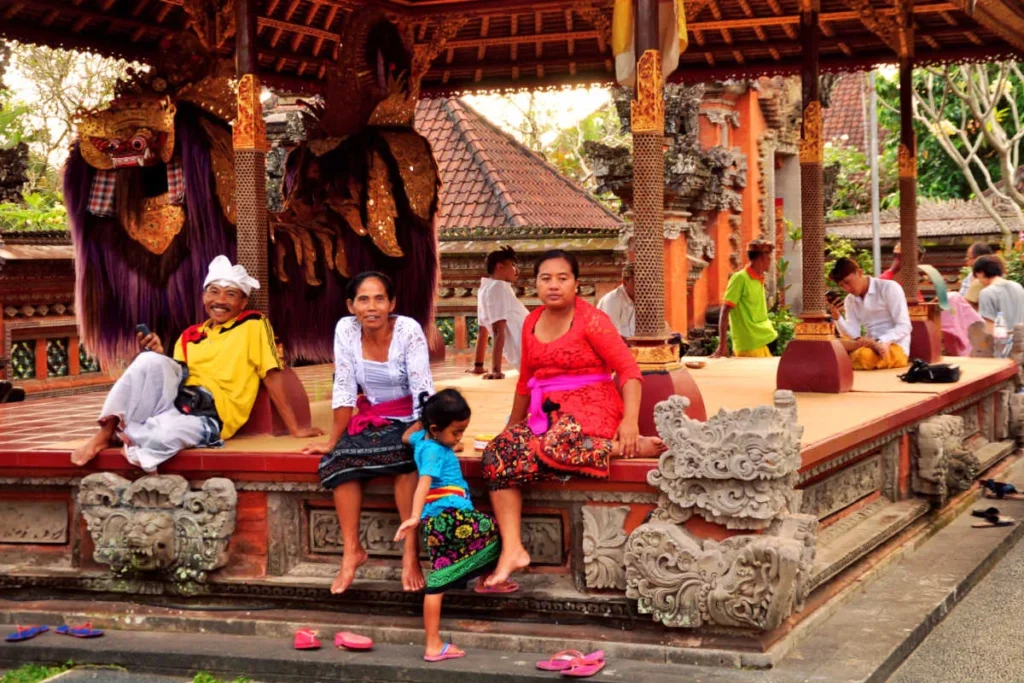
Bahasa Bali (Balinese) is a language that plays a major role in the island’s culture, social, religious, and daily life.
Balinese is more than just a spoken language, it has its own traditional “Balinese” script, unique ways of counting and a long story behind how it developed over centuries.
It is much harder to learn than Indonesian, and there are not many books or tutors offering services, but it is totally possible.
Important to note, that even though the Bali language is influenced by Sanskrit and Hindu culture, it went quite far from them.
History Of The Balinese Language
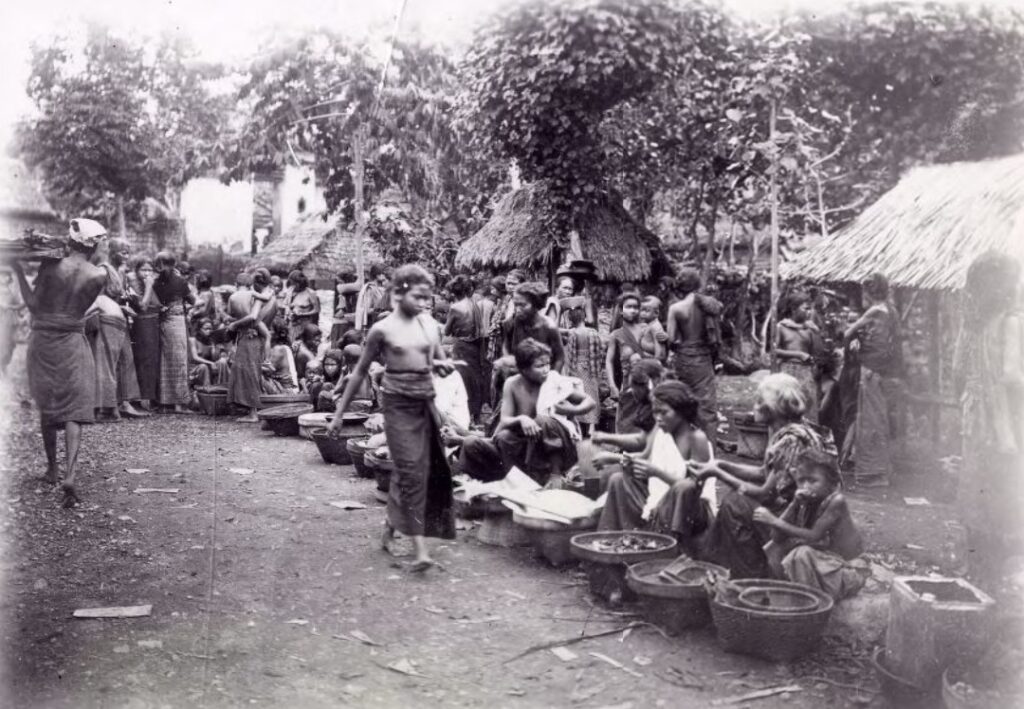
Balinese language itself has been spoken on the island for centuries and is part of the Malayo-Polynesian languages branch of the Austronesian language family (alongside Tagalog, Malay, and some dialects).
Ancient Balinese or Bali Kuna first appeared in old inscriptions and historical records around the 9th century, and later shifted into the modern Balinese people speak today.
Two major influences on the old Balinese language were ancient Javanese, which is called Kawi, and Sanskrit, which came to Bali when Hindu culture spread across the region. Both shaped many of the words used in prayers, stories, and traditional ceremonies.
Long ago important texts like religious teaching, folktales and historical notes were written on lontar palm leaves. These were traditional handwritten books that were carefully kept in the temples or sometimes passed down in family collections. They used a written form of the Balinese language that looks a lot like Sanskrit!
Today, the Balinese language is still preserved. According to the Bali Cultural agency, only about 1 million Balinese speak the original Bali language in their daily life.
Registers In The Balinese Language
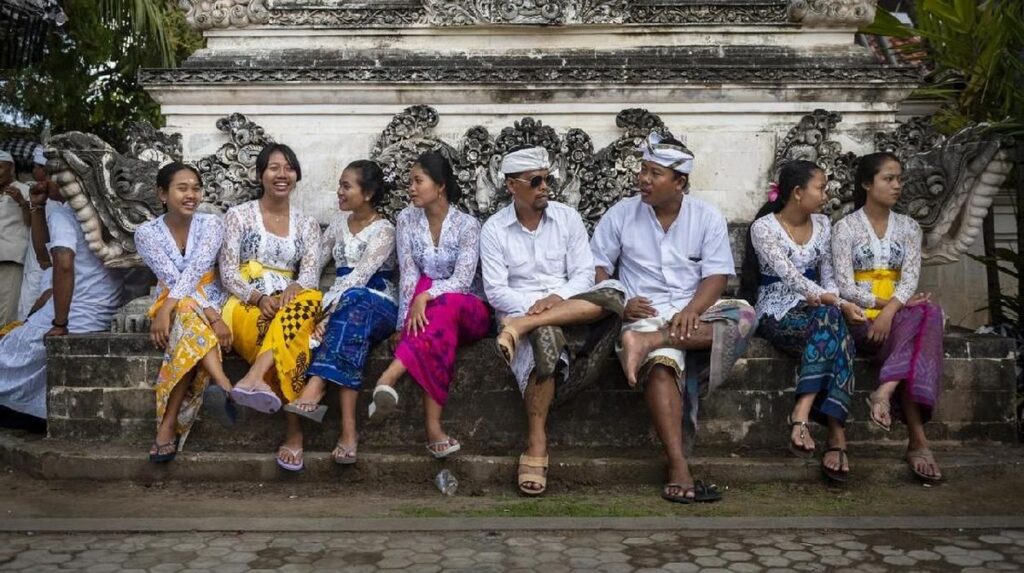
Another interesting thing about Balinese is its speech levels or registers, which change depending on who you are talking to (their social status) and determine what words you can use.
- There is Basa Alus (or Basa Singgih), the polite and refined form used with elders or during ceremonies,
- Basa Kalus, the High Balinese language reserved for strangers and situations when you are unsure about the social status (caste) or your new friend.
- Basa Madya (or Basa Madia) for daily conversation, and
- Basa Kasar (or Basa Ketah) is the more casual style used with friends.
Locals change between these levels naturally. This is a part of how respect and social connection are shown in Balinese culture.
Balinese Script (Aksara Bali)
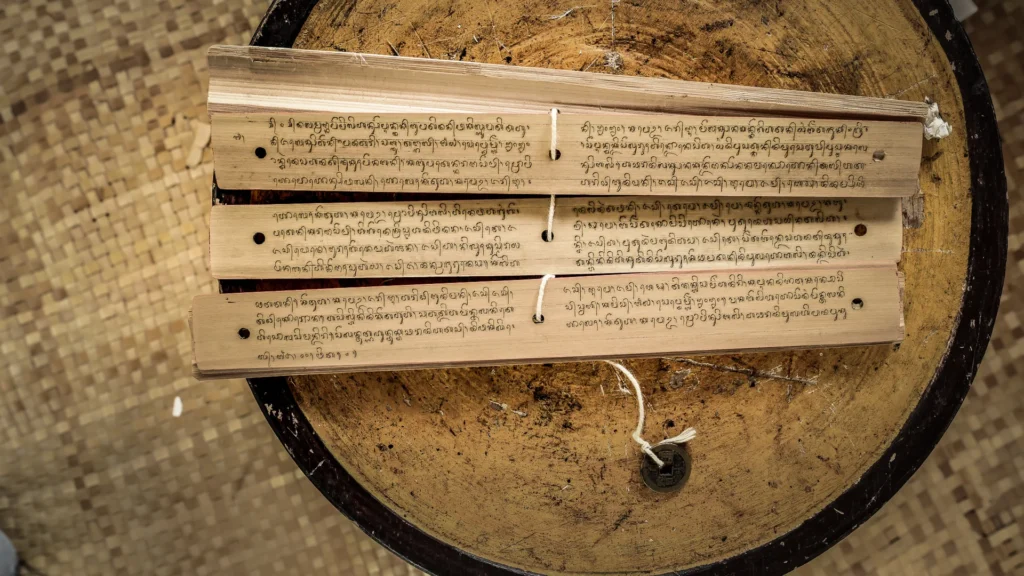
The traditional Balinese script is called Aksara Bali or Hanacaraka. It is not just a writing system, but an important part of Balinese culture and history.
Aksara Bali has a unique system of characters, including letters for consonants, vowels and combined sounds, plus special diacritics that affect the pronunciation.
One interesting feature is the subscript forms, which allow consonants to join together into clusters, making the writing neat and highly detailed.


The script also has decorative flexibility, so some letters are written in different styles for rituals, ancient stories, temple art, or ceremonial banners.
Some schools still teach Aksara Bali so younger generations can read sacred texts and preserve their heritage, but they have also adopted a script using letters from the Latin alphabet, called Tulisan Bali.
How Do Balinese Speak?
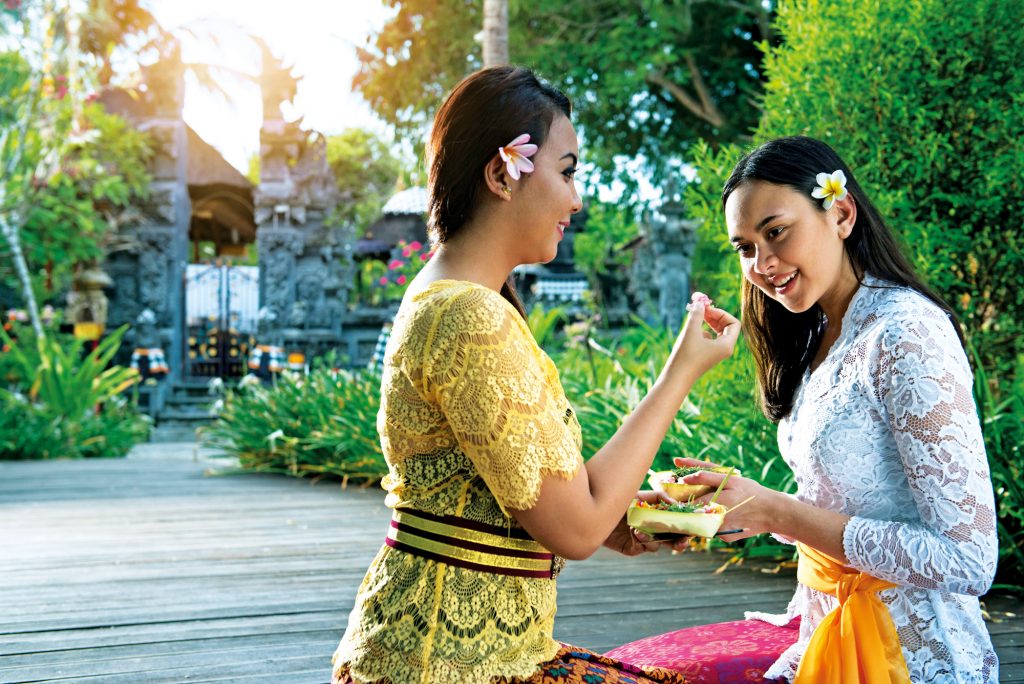
In Balinese phrases and words, the stress falls on the last syllable.
There are 18 consonants and 6 vowels with slight tonal differences, but the Bali language doesn’t have distinctive tones like Vietnamese or Chinese.
Another fun fact about spoken Balinese is that it does not use verbal tenses as we know them! It uses adverbs to show when something happened instead of changing the verb.
Numbers In The Balinese Language
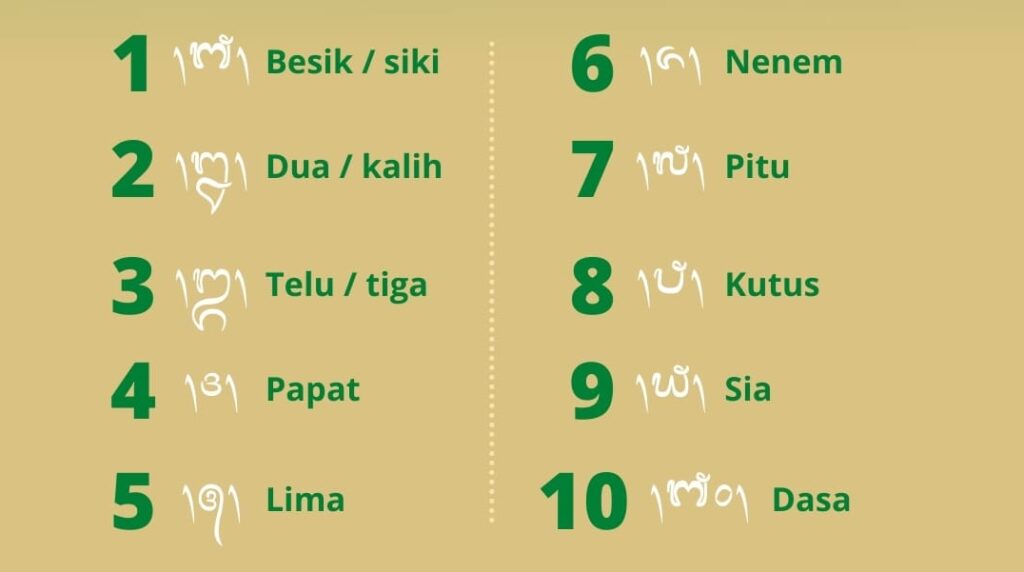
In daily situations like shopping at a warung, counting items or talking about time, locals mostly use Indonesian numbers because everyone understands them.
However, Balinese numbers are used in temples for ceremonies and cultural traditions, sometimes written in the traditional script. In traditional Balinese, numbers are also known as Wasta Wilangan.
Just like many other languages, the Balinese counting system still follows a decimal system (base ten). It means the counting works in groups of ten.
Some simple examples you might hear are besik (one), kalih (two),tilu or telu, (three), papat (four), and lima (five).
In certain cultural situations, like ceremonies or when talking about the Balinese calendar, some numbers have special names that don’t follow the usual counting pattern. For example: 45 can be called selae, while 175 may be referred to assatak selae, which literally means “one hundred forty-five” (satak means “one hundred” and selae means “forty-five”).
Writing In The Balinese Language
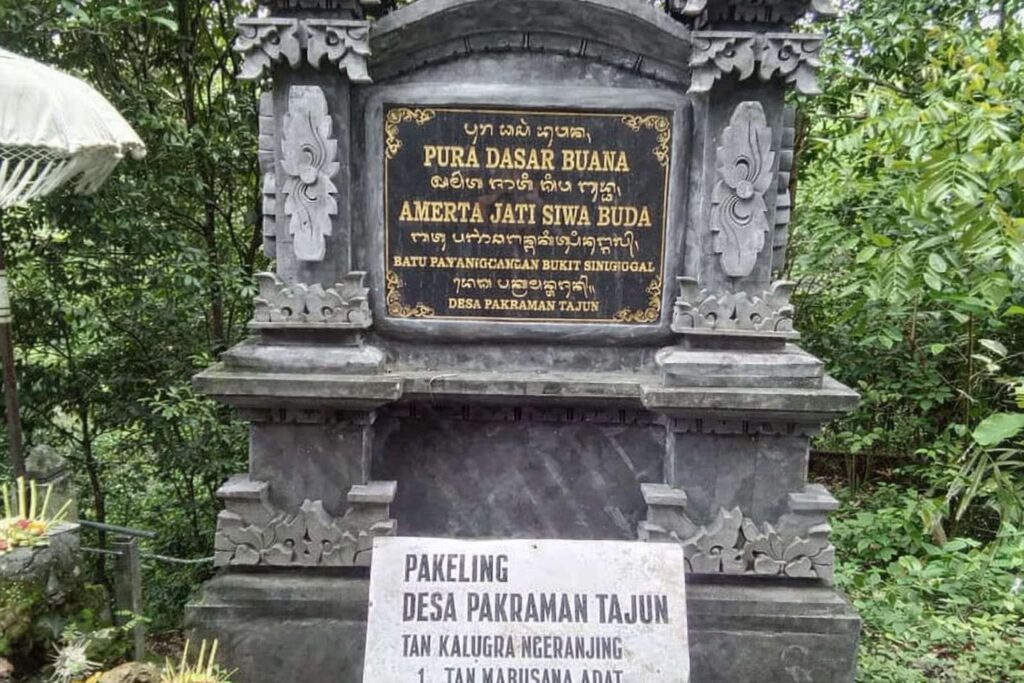
In Bali, writing appears in both modern and traditional forms.
For modern things like menus in most restaurants, street signs, guidebooks, or social media, people usually write using the Latin alphabet, just like in Indonesian. This makes it easier for both locals and visitors to read and understand.
But traditional Balinese writing has a strong presence across the island, especially for Balinese Hinduism.
The characters are written from left to right and use a system where each symbol usually represents a syllable rather than a single letter. Small marks placed around the main characters can change the vowel sound. This is why the script can look quite detailed and artistic.
Today, Balinese words and traditional phrases still appear on temple signs, monuments, ceremonial decorations and cultural buildings. You will see black stone plates with golden letters and writing in both Indonesian and Balinese.
Tips On How To Get Around Bali With Just English

Travelling around Bali using only English is not as difficult as you might think, especially in the hotspots like Canggu, Ubud and Seminyak.
Even though most Balinese people do not speak English, locals who work in hotels, tour guides, sellers in popular hubs will understand quite a few words and basic phrases with no problem.
Getting from A to B is easy with taxi apps like Grab orof which work both working in English. You just need to type in your destination, hop on, and let the driver do the rest.
Most drivers can speak English well too, so telling them where you want to go is usually no problem. They will actually be eager to practice and will ask you a standard Where are you from first! Many professional tour guides speak other languages, too, like Russian, Spanish, Dutch, French, Japanese, Korean, etc.
To be sure, you can always use the Google Translate app. It isn’t perfect but it will convey the message.
In smaller villages or places outside the main tourist spots, English might be limited. In these situations, speaking slowly, using simple words and showing a map on your phone is usually just fine. Locals are friendly and always willing to help.
Another insider tip is to make friends! If you find a local mate in Bali, they will be more than happy to help you out with any hiccups and share Indonesian and Balinese culture with you. And of course, they will teach you some practical Balinese phrases.
FAQs
How Do You Say Hello In Bali?
In Bali, a common way to say hello is “om swastiastu” in Balinese, which more or less means “ may there be peace and well-being” or “selamat pagi (good morning) or selamat malam (good evening) in Indonesian.
In more casual situations, people might just say “Halo”.
How Do You Say Basic Words In Balinese?
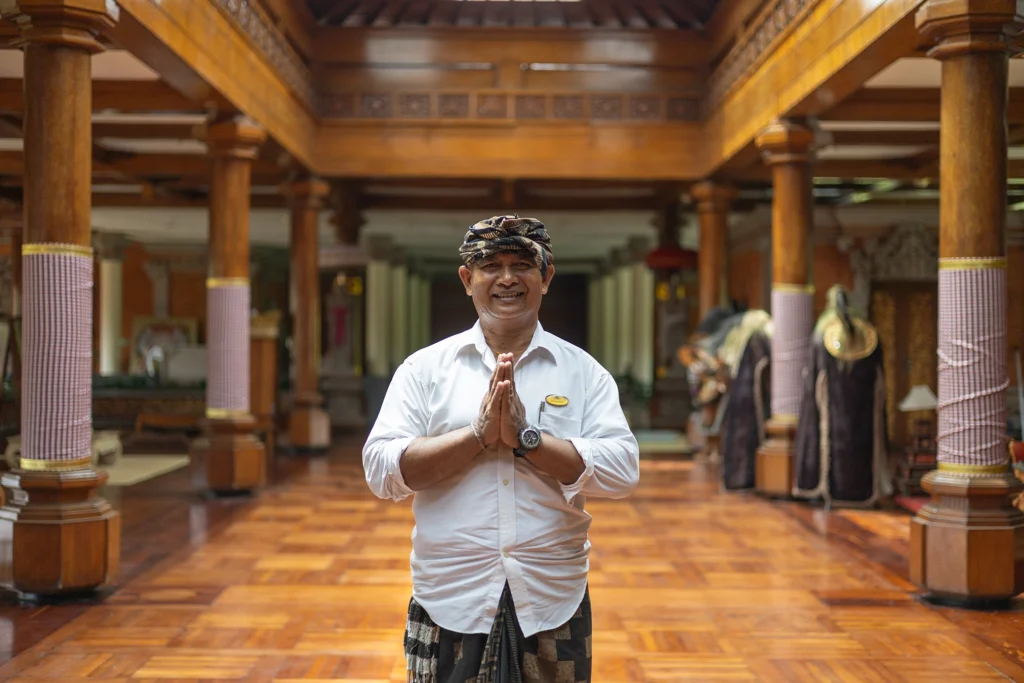
A few simple Balinese words can go a long way with the locals.
“Suksema” means thank you and people usually appreciate hearing it from visitors.
A traditional greeting you will hear a lot is “om swastiastu”, which is a polite way to say hello and send best wishes. In the morning you can say “rahajeng semeng” (good morning) and in the evening , “rahajeng wengi” (good evening).
For simple answers, “Inggih” means yes, while “tusing” means no.
Other useful words include “sampun” (already/done), “durung” (not yet), “mangda” (please), and “nenten” (not).
Note that most of these words are not considered “high Balinese” so may not be appropriate when addressing a priest or your social superiors.
Can You Speak English In Bali?
Yes, totally.
You can easily get around Bali using just English, especially in the main tourist areas like Kuta, Seminyak, Canggu, Nusa Dua, Uluwatu, or Ubud.
Because the island attracts a lot of visitors from all over the world, you will hear English used in many everyday travel situations.


You can usually communicate without much trouble when asking about directions, arranging transportation, ordering food, checking into accommodation, or booking tours and activities. Plus, a lot of communication happens in WhatsApp, so you can use Google Translate.
How Do You Say No Thank You In Bali?
If you want to politely say “no, thank you” in Balinese, just say ”tenten, matur suksema” or “nenten, matur suksema, if you are addressing Balinese Hindus. It literally means “no, thank you very much”.
However, if you are in a predominantly muslim area of Bali, use Indonesian language and say “tidak, terimakasih”.
Is Hindi Spoken In Bali?
Even though Bali’s vibrant culture and religion took a lot from Hinduism, Hindi is not commonly spoken in Bali.
The main languages are Bahasa Indonesia and Bahasa Bali (Balinese).
But, since Bali is a popular tourist destination, some people in the tourism industry may know a little Hindi, however, English is way more commonly used than Hindi.
Final Thoughts On Bali Language
Speaking even a few words in a local language will open doors no matter where you are. In Bali, Balinese phrases are so rarely spoken by foreigners that if instead of Hey, mate! you say Om Swastiastu, the level of pride and happiness on faces will be hard to beat!
Plus, learning about such a huge part of the Balinese society will give you a glimpse into the island’s culture and religion.