The history of Bali is long and glorious and the Indonesian government has done an excellent job in allowing historians to describe the rise and fall of various influences in the region from the early animist tribes to the modern-day integration into the Republic of Indonesia.
However, much less has been said about the history of the area of modern beach clubs and rice fields, Canggu.
So, we’ve taken a deep dive into the local community, the local culture and the impact of mass tourism to create our own brief history of Canggu.
Where Is Canggu?
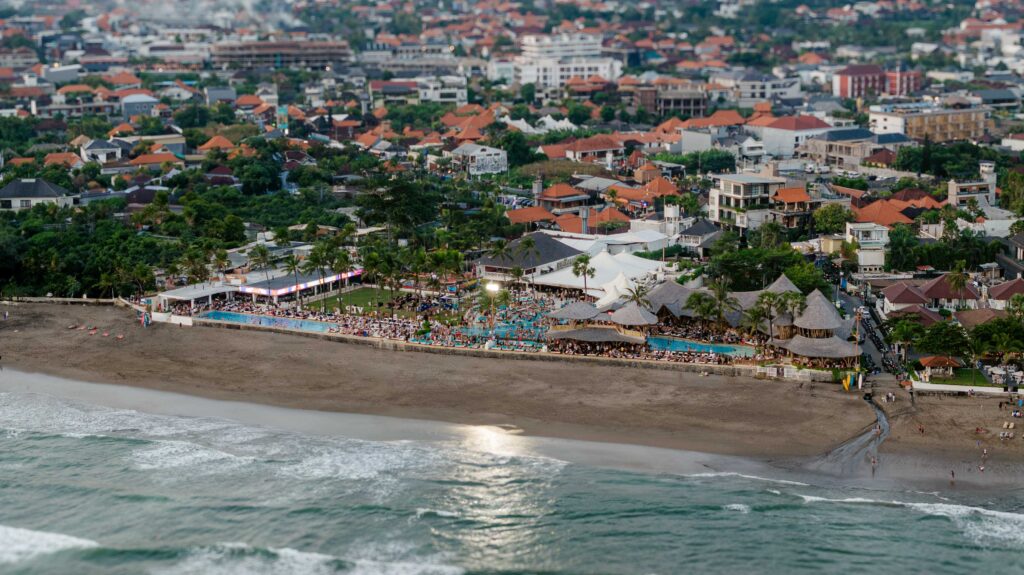
Canggu is in the Bandung Regency and it’s part of the North Kuta District. It’s about a 10-kilometer trip to Kuta from Canggu and 12 kilometres to the capital, Denpasar.
The main feature of Canggu is the 10-kilometer strip of beach which runs parallel to the village (now a town) of Canggu on the South-Western coast of Bali.
It is currently considered to be the most popular tourist destination on the island and nearly every visitor to Bali will spend, at least, some time in Canggu while they are on vacation.
A Very Brief History Of Canggu From Prehistory To Modern Day
In many respects, the history of Canggu, right up until the nearly present day, mirrors that of the island as a whole.
Key highlights of this history include:
- The formation of Bali (well over 1 million years ago) was due to the tectonic subduction of the Indo-Australian tectonic plate under the Eurasian tectonic plate. The island sits over the local deformation of the Eurasian plate and as such has clear volcanic activity, however, there are no active volcanoes in or around Canggu.
- The arrival of Java Man – it is clear that Java Man (a species of human known as Homo Erectus to the rest of the world) arrived in Bali around 1 million BC to 200,000 BC. There’s no evidence of this initial settlement being in Cangu, however, in the hills of the Badung Regency near Canggu, they’ve discovered evidence of more recent waves of occupation by Homo Erectus around 45,000 BC!
- The arrival of Austronesian Man – between 3,000 and 600 BC a new culture arose in Bali. Austronesians arrived from China, the Philippines and Sulawesi and began to develop Bali. Even today, you can find specific traits of the Austronesian civilizations in Balinese culture.
- The Bronze Age arrives – between 600 BC and 800 AD, it is clear that the Bronze Age had begun in Bali and bronze working techniques arrived from Vietnam. However, the raw materials were not found anywhere in Bali and had to be imported for bronze workers to fashion their wares.
- Animism – Bali was originally populated by animists who would worship the spirits of their ancestors and the spirits of every living being. While Animism has long since been replaced across Southeast Asia, you can still find spirit houses in most temples that relate to this tradition.
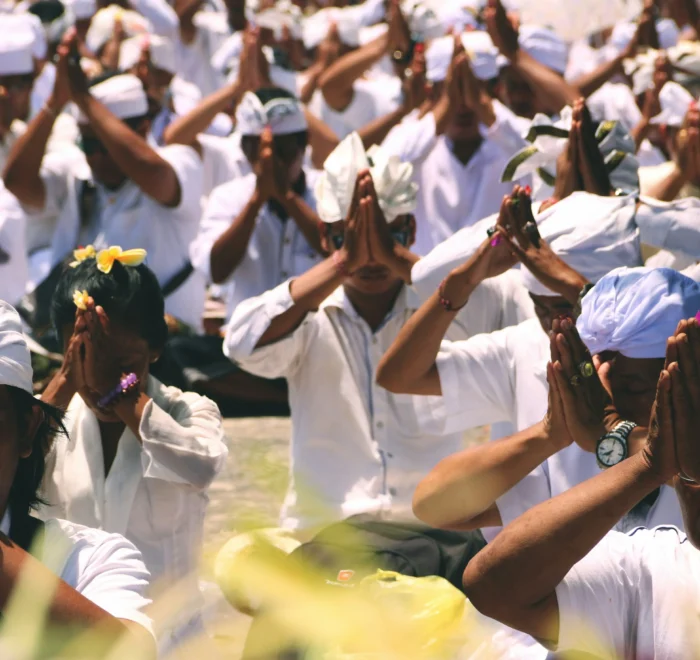
- Buddhism and Hinduism arrive – between 800 AD and 1343 AD, Buddhism and Hinduism arrived in waves from the Indianized Kingdoms of the day. Bali is unusual in that it’s the only part of Southeast Asia where Hinduism was not ultimately supplanted by Buddhism but there are clear Buddhist influences in Balinese Hinduism as there are clear Hindi influences in Thai, Cambodian, Malay, and Burmese Buddhism.
- The Majapahit Dynasty – from 1343 AD to 1846 AD, Bali was governed by the Majapahit Empire. The greatest empire that Indonesia had ever known and it was the arrival of Islam that saw the dynasty crumble and their rule in most of the archipelago diminish. However, the surviving Hindu aristocracy fled to Bali where Hinduism continues to flourish to this very day.
- The Modern Historical Period – following 1846, Bali and most of Indonesia was colonized at various times first by the Portuguese, then the Dutch, then the English, then the Dutch again, then by the Japanese during World War 2 before briefly falling into the hands of the Dutch again at the end of the war before Indonesia declared independence. While you can find evidence of these various colonial efforts on the island, there’s not much evidence of them in Canggu in 2025.
The Evidence Of Ancient Canggu
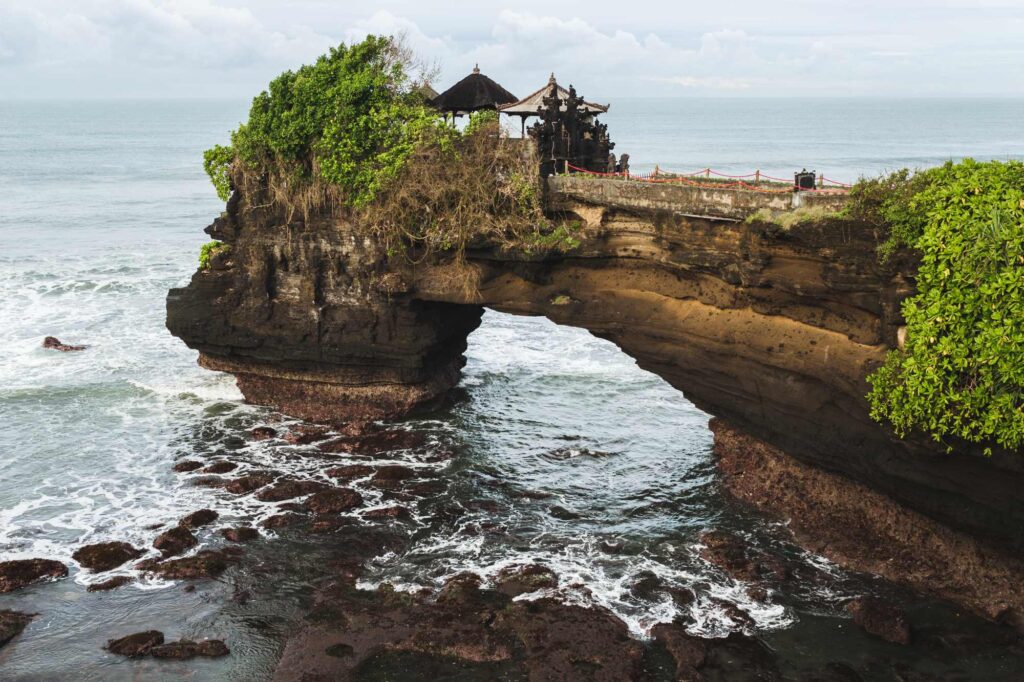
You will often hear that Canggu’s culture has been supplanted by tourism but this isn’t the case and while there are very few historical records that refer to Canggu’s early history – there are places that offer clear evidence of the Hindu origins of the fishing village of Canggu.
- Tanah Lot Temple – this guardian temple on a small island off the short of the island is the most famous temple in Canggu and has been in place for many centuries.
- Pura Batu Bolong and Pura Batu Mejan – these two temples were constructed by the famous Hindu traveller Dang Hyang Niratha in the 16th century.
- Pura Gede Luhur Batu Ngaus – is another ancient temple almost unknown to tourists but which is said to promote healing and wellbeing. This temple is very similar to Tanah Lot but much less visited and worth seeking out for a spectacular sunset view.
- Pura Merajapati and Piptian Cemetery – these two areas pay tribute to the dead and have also been in use for centuries.
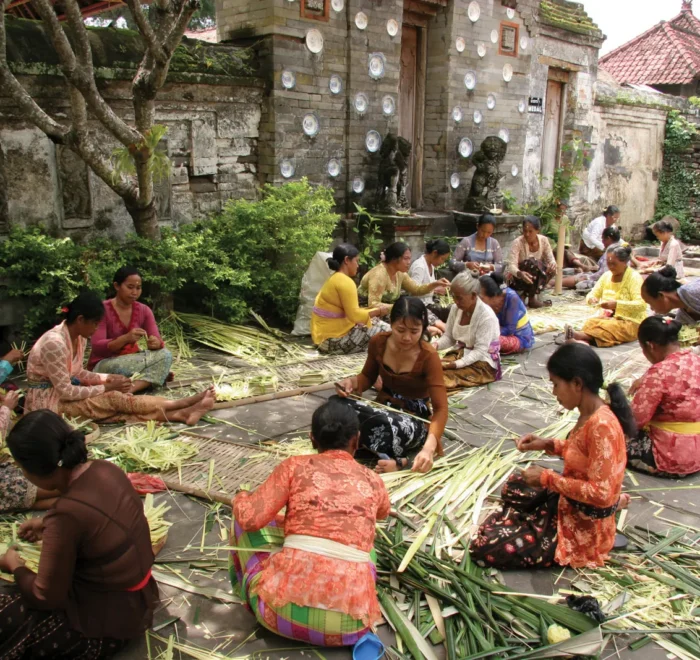
There isn’t a lot more in this area, though there are many family temples that have been in constant use for centuries but which will have been regularly refreshed (this is very much standard in Southeast Asia, most temples are renewed regularly to ensure that people’s relationships with their gods are always in the best possible order) and may appear to be much newer than they are.
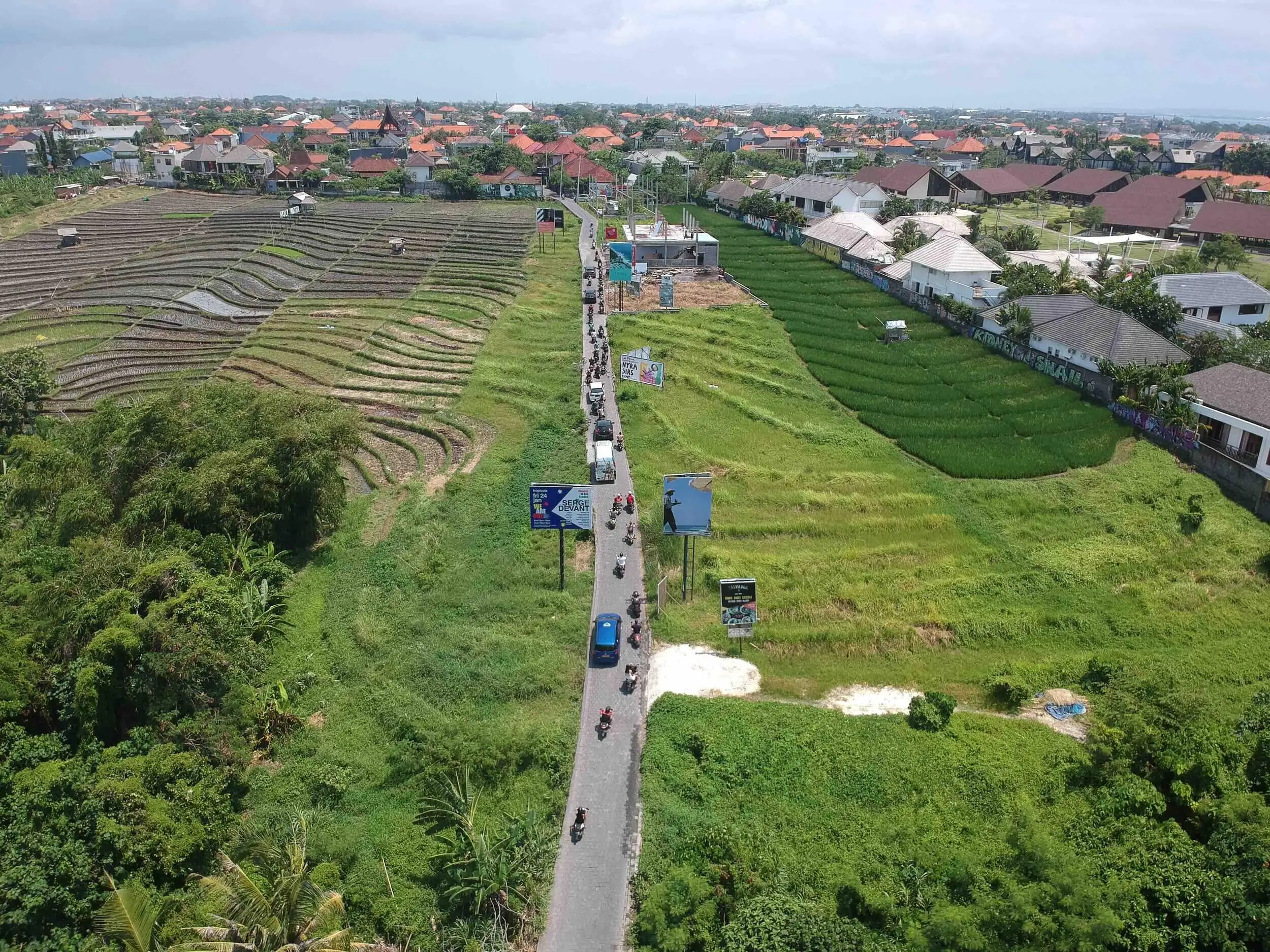
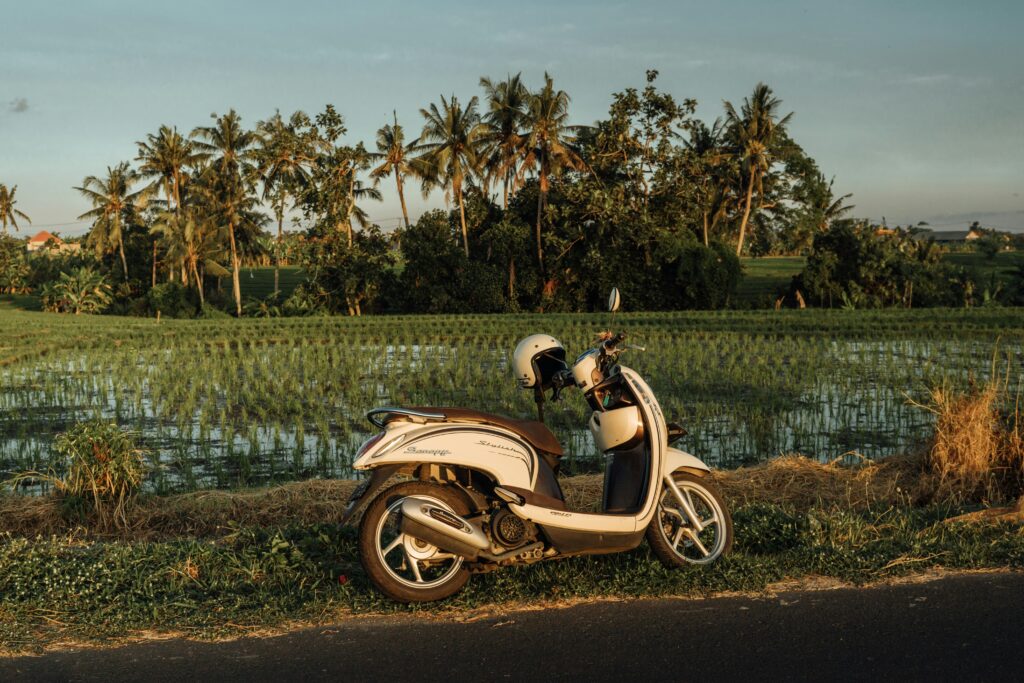
It may help to remember that the settlement in Canggu, intil recently was only a small fishing community and the vast majority of this area was rice fields and coconut groves.
Canggu’s Beaches
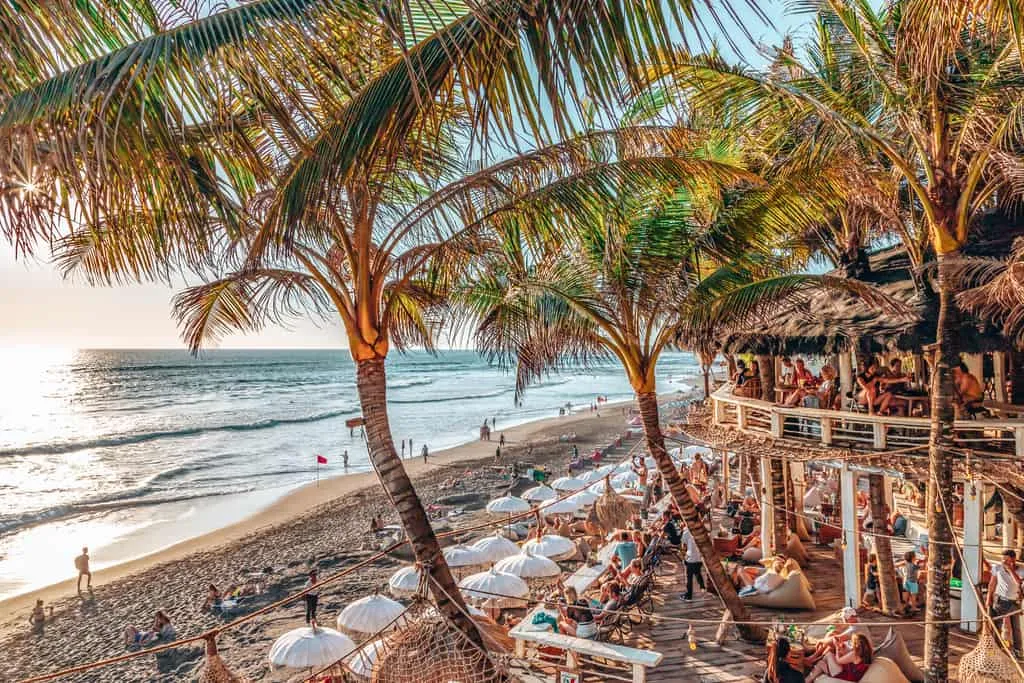
The big draw to Canggu which has seen the transformation of this sleepy part of the island to a modern tourist attraction is the set of nine beaches that run from one end of the settlement to the other.
They are:
- Canggu Beach
- Echo Beach (alt. Mejan Stone Beach)
- Batu Bolong Beach
- Pererenan Beach
- Berawa Beach
- Seseh Beach
- Kayu Putih Beach
- Nelayan Beach
Until about 1990, these beaches were pretty much untouched. Sure, some surfer might have stumbled across the breaks at Berawa Beach or Echo Beach but the local community had not yet greeted any real volume of tourists. (Find out about surf lessons in Canggu here).
The Modern Development Of Canggu
In 1990, Canggu would begin its rapid transformation from a sleepy fishing village to a tourism powerhouse.
It began when the Canggu surfing community decided to host an international surfing competition on the area’s beaches.
Given the development of the neighbouring areas of Seminyak, Kuta and Legian, new faces to Canggu for the tournament soon realized the huge potential of the area.
Money began pouring in and the rice fields began to transform into urban development.
In 1990, there was the occasional guest house in the area – by 2023, there were 324 hotels and other lodging businesses registered in the village of Canggu! And that’s not counting the several thousand villas that have sprung up around them, some of which are for rent by tourists.
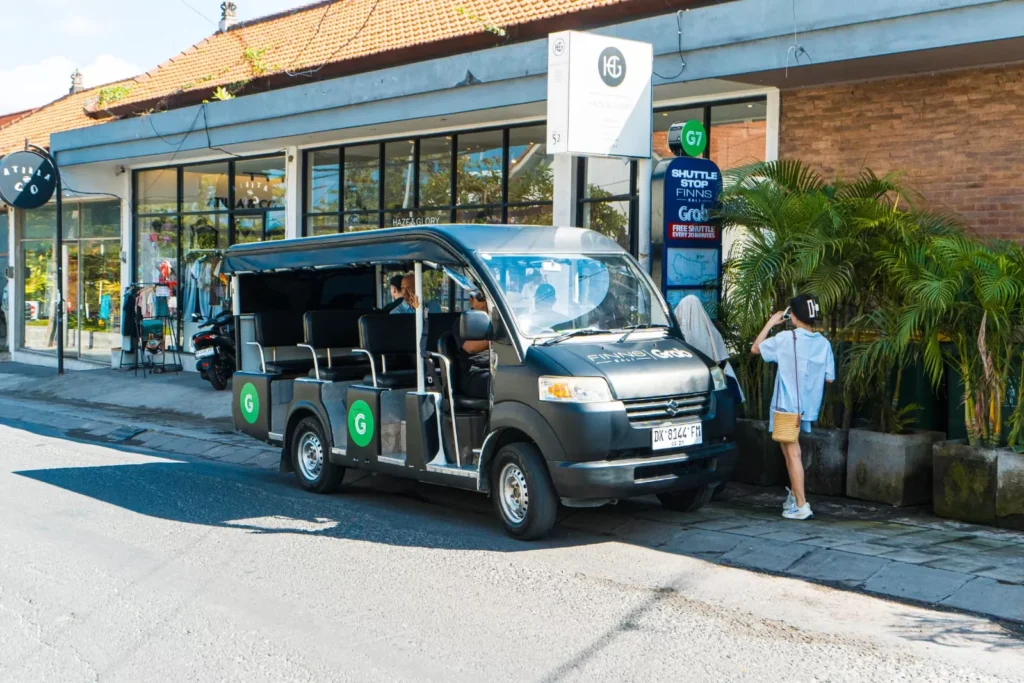
The area is home to many major brands from the world’s best beach club, FINNS, to villa developments by Hugo Boss and big-name luxury resorts like Anantara. FINNS Resort will soon open in the area and set new standards for Canggu developments.
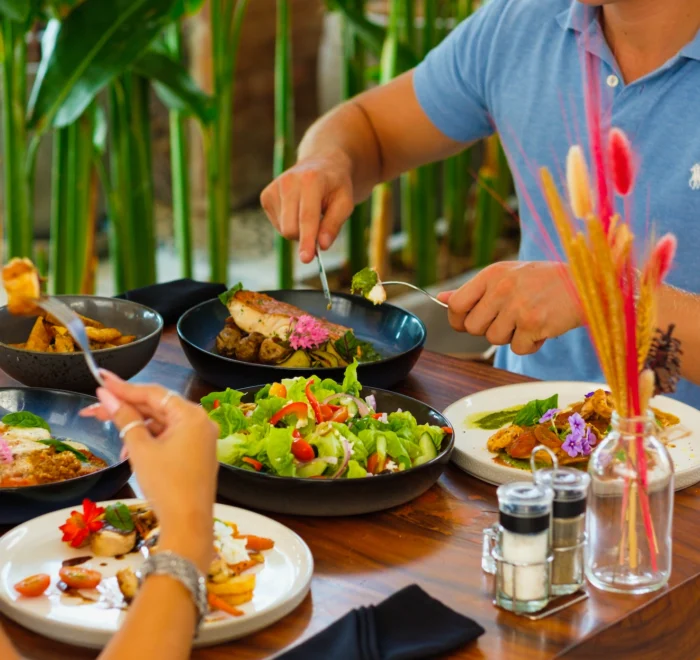
The local warungs now rub shoulders with the most diverse dining scene on the island with cafes, restaurants, bistros, beach clubs, night clubs, street food and more available to every visitor. They also rub shoulders with lots of street dogs (learn more about street dogs in Canggu).
The Negative Impact Of Mass Tourism On Canggu
These developments have not all been positive and Canggu has seen certain struggles due to the incredibly rapid influx of tourism into the area.
The Dwindling Fresh Water Supply
Tourism now consumes about 65% of all water used on the island and the water table has dropped by nearly 60%.
Canggu has played its part in this problem and most residential property in the area is connected to the mains – which means piped water.
Unfortunately, mismanagement (which sees more than eleven government departments running the mains water and providing licenses, supply, etc.) is rife and thus, this problem is not likely to be solved any time soon.
On the bright side, many of the new developments in Canggu are eco-friendly and they seek to use alternative water sources (such as rain water capture) to lessen the burden on the water table.
Tourism Revenues Unequally Shared
We’re not sure if there’s anywhere on Earth where tourism exists where the revenues are shared equally but it’s fair to say that it’s often true in Canggu that big companies are able to make much larger percentages of profits than smaller ones.
This can be a problem because often the smallest businesses are owned by the most vulnerable local people. However, this is really a problem of capitalism and it’s not something unique to Canggu or Bali.
Spiralling Cost Of Living
We’re not sure how much of the spiralling cost of living across Bali (not just in Canggu) is down to development and how much of it is due to the pandemic response.
Either way, there’s no doubt that this tourist town is becoming more expensive than it once was.
Local Culture And Tourism Can Clash
There are some rumbles of dissatisfaction from some members of the local community as they say that they feel that their culture is becoming monetized to appeal to tourists.
They also say that they feel they have less of a say and less influence in the direction of local development than they might in some other towns in Bali.
However, overall, the locals tend to be very supportive of tourism and they understand that it makes a dramatic impact on the lives of countless Balinese.
The Positive Impact Of Mass Tourism On Canggu
On the flip side of things, there are undoubtedly some huge benefits to tourism in Canggu too and these include:
Massive Job Creation
The hotels, beach clubs, resorts, restaurants, etc. employ tens of thousands of Balinese people.
Recent figures from FINNS Beach Club, for example, showed that they employ over 2,000 Indonesian nationals and that more than 1,800 of those nationals are from Bali.
It’s often easy for foreigners bemoaning the change in character of Bali in recent decades to forget how many people have been lifted out of poverty by tourism on the island.
New Opportunities For Local Communities To Be Involved In Developments Such As Beach Clubs, Hotels, Etc.
While it is true that Bali sees a lot of foreign investment, these investments have enabled the locals to learn about new industries and to branch out themselves.
Until recently, the only industry in Bali was agriculture and while much of that industry remains, it now accounts for only 10-15% of the local economy!
Almost every other penny in the economy is due to tourism and this makes an incredible difference to the lives of many local people in a positive way.
Income Diversification For The Local Community
Agriculture is a dangerous business. It only takes a year of bad weather to wipe out your crops and leave your population at death’s door.
Tourism and the related industries that have sprung up in Bali ensure that there is income diversification for the local communities and that a change in weather doesn’t mean a year without food.
FAQs
Why Is Canggu Famous?
Canggu is famous as a surfing destination and more recently for its beach club scene.
FINNS, the world’s best beach club, is based in Canggu and many of the other big names in the industry here on the island are also based in Canggu.
You’ll also find that Canggu has a good reputation as a place with some balance between traditional culture and modern culture, more so than Semiyak, Kuta and Legian the other popular beach towns.
What Is The Meaning Of Canggu?
Canggu is simply the name of the original village that was found on the coast of Bali and has developed into a thriving tourist town.
It has no deeper meaning that we could ascertain.
Is Canggu Nicer Than Seminyak?
Yes, we think Canggu is nicer than Seminyak. Seminyak has been over developed and while it’s home to some lovely tourist developments the rice fields, temples, etc. are almost all gone in Seminyak now.
Canggu, on the other hand, has managed to retain some of its original identity and it’s nicer for it.
How Many People Live In Canggu?
The most recent figures from 2022, suggest that there is a permanent population of around 40,000 people in Canggu.
This is a mix of locals and expatriates who work in many of the local businesses.
This is a population density of around 1,300 people per square kilometre. This is about 1/8th the population density of Sydney, Australia which is 8,600 people/square km.
Is Canggu Worth Visiting?
Yes! We think Canggu is one of the best places to visit in Bali and many thousands of people agree with us.
In fact, Canggu is currently the most popular place to be on the island.
With a nice mix of local culture and tourist razzmatazz, you can easily have a great holiday just in Canggu or make it one destination on a multi-centre holiday in Bali and/or Indonesia as a whole.
Is Canggu A Party Town?
It can be. Canggu is a large area and not all of it is about partying but the beaches of Berawa, Batu Bolong and Echo Beach are very popular spots for partying.
Why Do People Like Canggu?
People like Canggu because it has an amazing mix of modern conveniences such as luxury villas, awesome resorts, fine dining restaurants, fantastic street food stands, etc. and traditional Balinese culture such as beautiful temples and rice fields.
What Is The Busiest Street In Canggu?
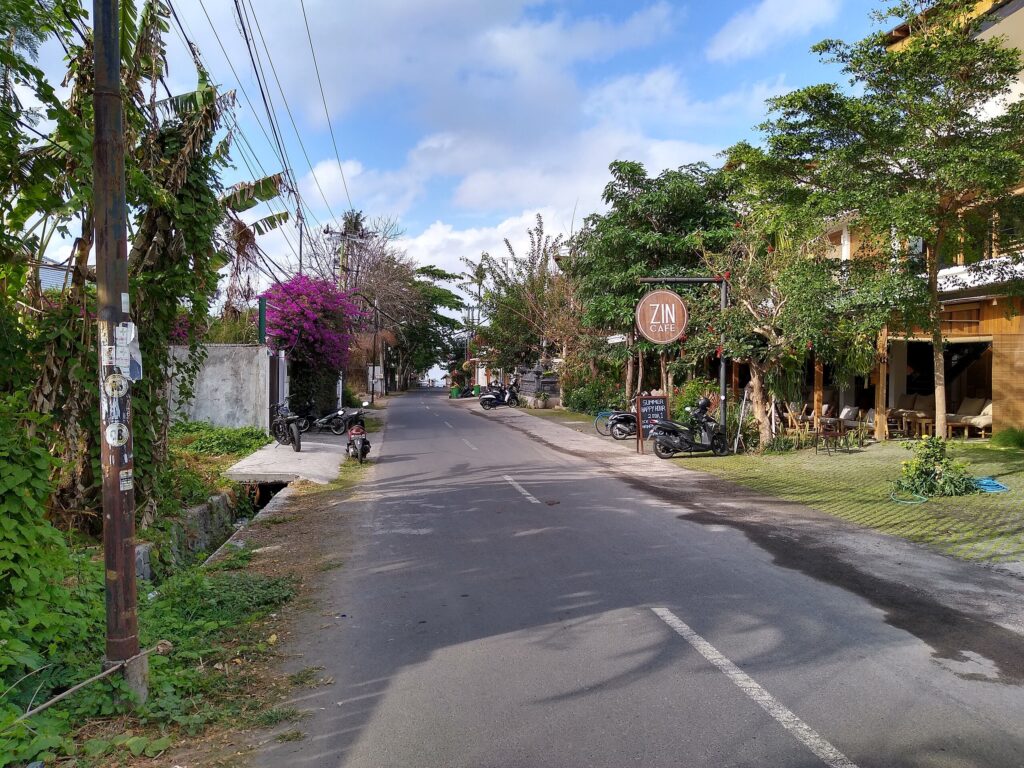
The busiest street in Canggu is Jalan Pantai Batu Bolong which has the most shops, restaurants, bars and clubs in the area.
It’s reasonably well pedestrianized and is one of the more walkable parts of the island.
However, we should note that not even this tourist hot spot is wheelchair accessible and anyone with mobility issues, will need to proceed very carefully, indeed, on Bali’s sidewalks, pavements and roads.
Final Thoughts On The History Of Canggu
The history of Canggu is fairly brief. In the main, it varies very little from the history of the island itself.
Canggu was until fairly recently a sleepy backwater fishing village with some interesting temples and beautiful beaches.
Today, it’s one of the most developed and exciting areas on the island and while this is generally a positive thing, there are some teething problems that still need to be ironed out in order to ensure that tourism benefits all the locals.