Got some free time staying in Ubud?
Venture outside the central Ubud and come visit the Goa Gajah Temple complex – one of the oldest and most unique temples in Bali with the iconic Elephant Cave and deep Buddhist traditions.
All you need to know to plan a smooth temple visit is in our guide.
Summary: What’s the Goa Gajah Temple Is About?
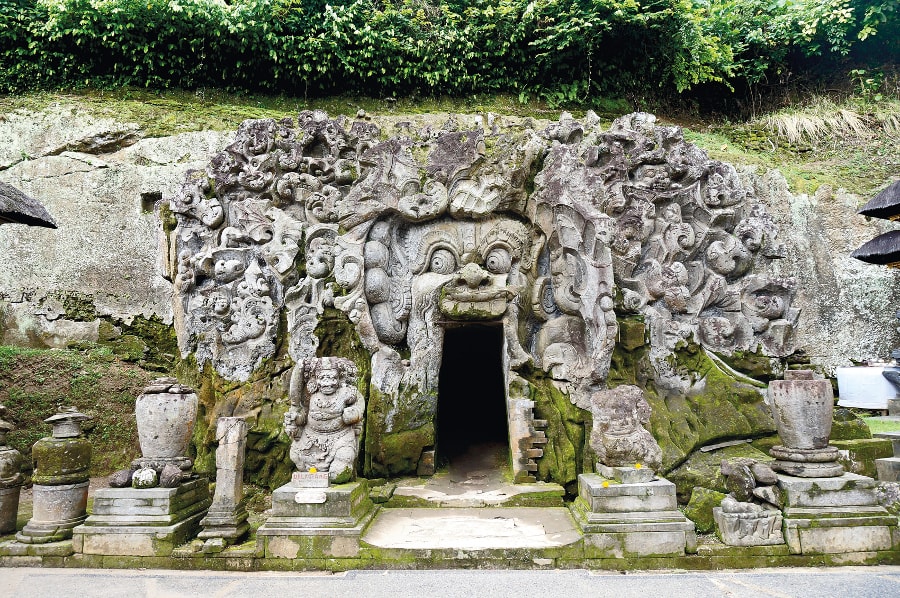
Goa Gajah translates to “The Elephant Cave” in the Indonesian language, literally. And it is one of those cultural sites on Bali island that are completely underestimated.
Once you get here, it is more than just an old Hindu temple. It comes with a stunning stone-carved entrance, greenery surrounding it, and the gardens and bathing pool over a few levels.
Plus, it is super close to Ubud, so it can be an easy half-day trip.
Where Is Goa Gajah Located?
Goa Gajah is located in Bedulu Village, in the Gianyar Regency, about 10 minutes from Ubud.
Bedulu is actually one of Bali’s ancient settlement areas and was once an important religious centre on the island.
Even though the temple is close to Ubud, you immediately get into a very local area. You will pass family compounds, village temples, and narrow roads on the way, and there aren’t many cafés or shops nearby.
Address: Jalan Raya Goa Gajah, Bedulu, Blahbatuh, Gianyar Regency, Bali, Indonesia
How To Get To Goa Gajah Elephant Cave

The fastest and simplest way to get to the Goa Gajah cave and temple is from Ubud. You can just order a taxi or hop on a rental bike and you will be here in about 10-15 minutes. The taxi will be very cheap.
However, if you want to make a few stops along the way, as there are also a few waterfalls, Tegallalang Rice Terraces, and a mask and puppet museum around, it is best to hire a private car with a driver. It is affordable to have a private driver in Bali and it gives you a lot of freedom.


If you are travelling from Canggu, Seminyak, Uluwatu, or straight from the international airport, the best way to get to Goa Gajah is by car.
You will be able to get a taxi, but most likely only one way as it is quite a long distance and very few drivers will be up to it.
There is no public transport that goes here.
Is There An Entrance Fee to the Goa Gajah Temple
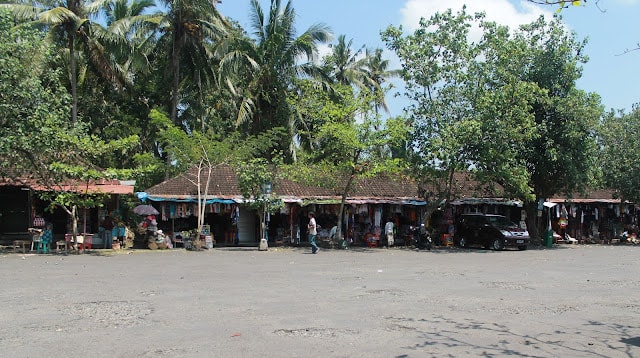
Yes, you can purchase a ticket at the entrance. It is 50,000 IDR (5 AUD) per adult, and 25,000 IDR (2.5 AUD) per child. Tickets are about 40% cheaper for locals.
The ticket includes a sarong, which you’re required to wear inside the temple area, and there’s a small additional fee for parking (under 1 AUD).
It’s best to bring cash, as card payments aren’t always accepted and there’s no ATM right at the entrance.
You can also pay for a private guided tour by one of the keepers, it will be about 300,000 IDR (30 AUD).
Facilities are simple but adequate, and toilets are available near the main area.
When Is The Best Time To Visit Goa Gajah
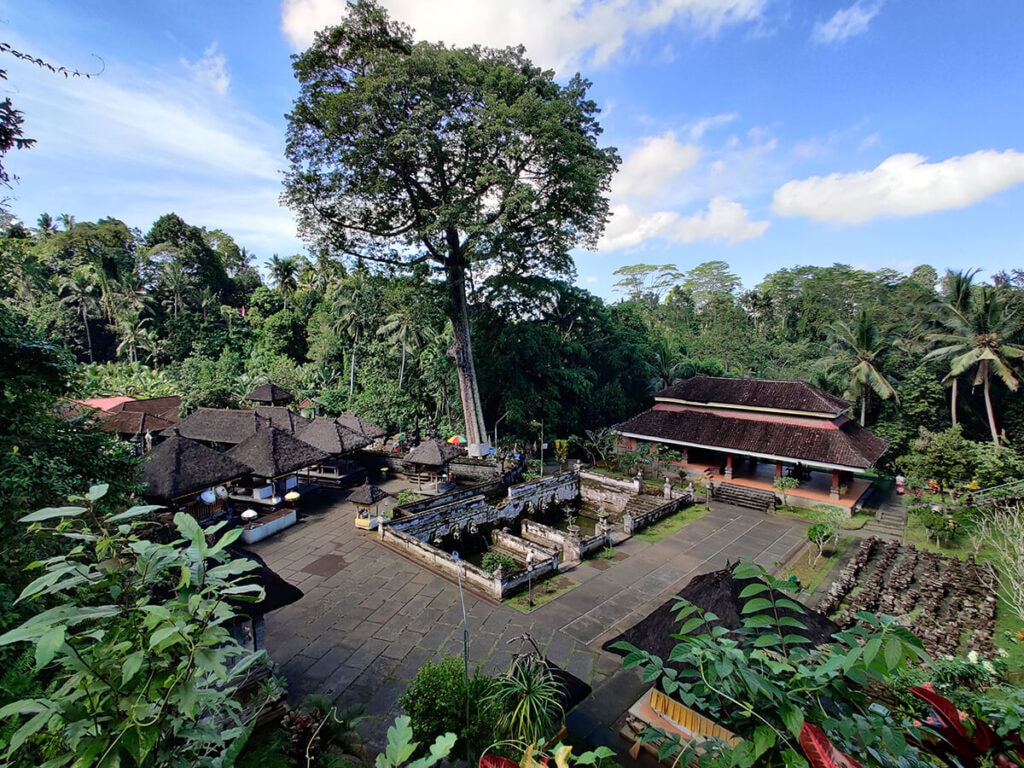
If you want to beat the crowds and the heat, the best time for a temple visit is early morning. The temple is open at 8 AM, so anywhere before noon is good.
The site gets busy right after 12 PM and in the afternoon.
History Of Goa Gajah
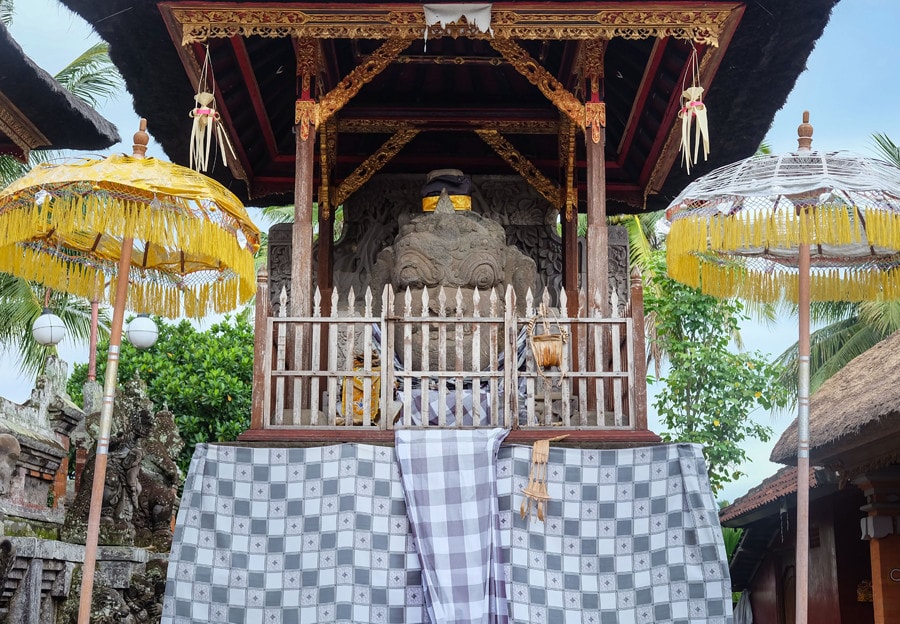
You will notice that the Goa Gajah temple doesn’t look like any other Hindu temple in Bali.
While we don’t know for sure, different sources place the Goa Gajah temple back in time all the way in the 9th century, but there is no proof of that.
Some say it was most likely built under the Warmawewa Dynasty between the 10th and 15th centuries.
It does sound more believable since you can find the mention of the Elephant cave temple in Desawarnana – a Javanese poem from the 14th century that contains descriptions of royal cities, practices, and ceremonies of the Majapahit Kingdom.
According to Balinese mythology, the cave appeared under the finger of the legendary giant Kebo Iwa – their beloved warrior and protector of the island.


Once upon a time Goa Gajah was used to worship both Hindu and Buddhist gods, which we can still see in the Hindu and Buddhist elements in the carved images on the entrance wall, and buildings like stupas or chattras.
Locals think it was more of a place for meditation for Hindu and Buddhist monks, like a retreat, based on the extensive bathing place and peaceful gardens surrounding the temple.
This archaeological site where the cave was found in 1923 by Dutch archaeologists, but the lower garden and bathing pool were only rediscovered in mid 50s!
Why Is It Called The Elephant Cave?
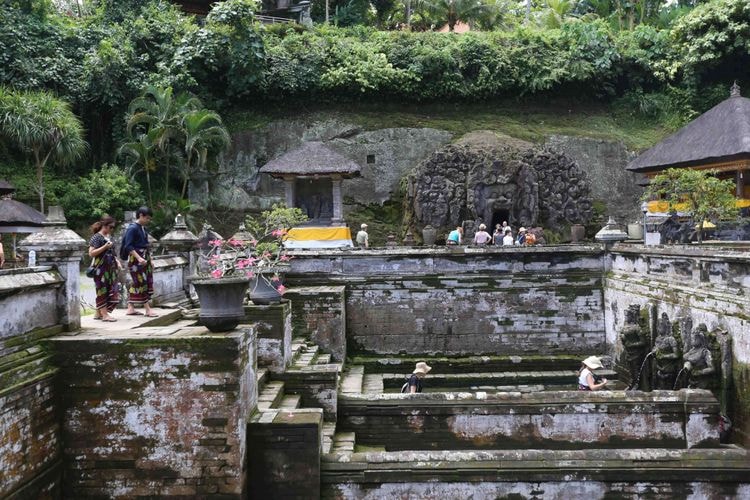
The name “Elephant Cave” often causes confusion, since there are no actual elephants here and the gaping mouth forming the cave entrance doesn’t belong to an elephant either.
One explanation links it to the Ganesha stone figure inside the cave – the elephant-headed god of all new beginnings, arts, wisdom, and science.
Another theory connects the name to a nearby river that was once associated with elephants in local tradition.
Goa Gajah Temple is located on the Petanu River, which Indonesians used to call Lwa Gajah, which literally means The Elephant River. As there were no elephants in the area, it is very possible that the river took its name from the cave and not the other way around.
What To Expect At Goa Gajah Cave & Temple
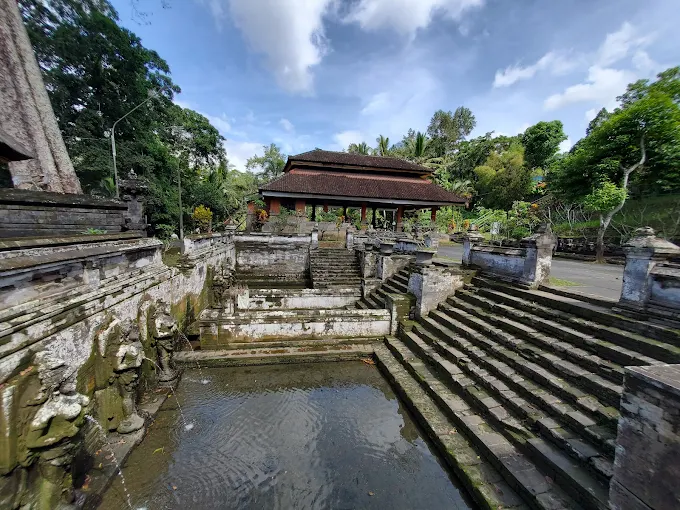
Most people visiting the Goa Gajah temple, come to see the statue of the Hindu God Ganesh, but there are more things to enjoy here.
Outside the complex, you can also see what souvenir shops have to offer, just bring cash!
Please note that there aren’t many food options right next to the temple, so we usually plan to eat back toward Ubud.
The Main Cave & Carved Cave Entrance
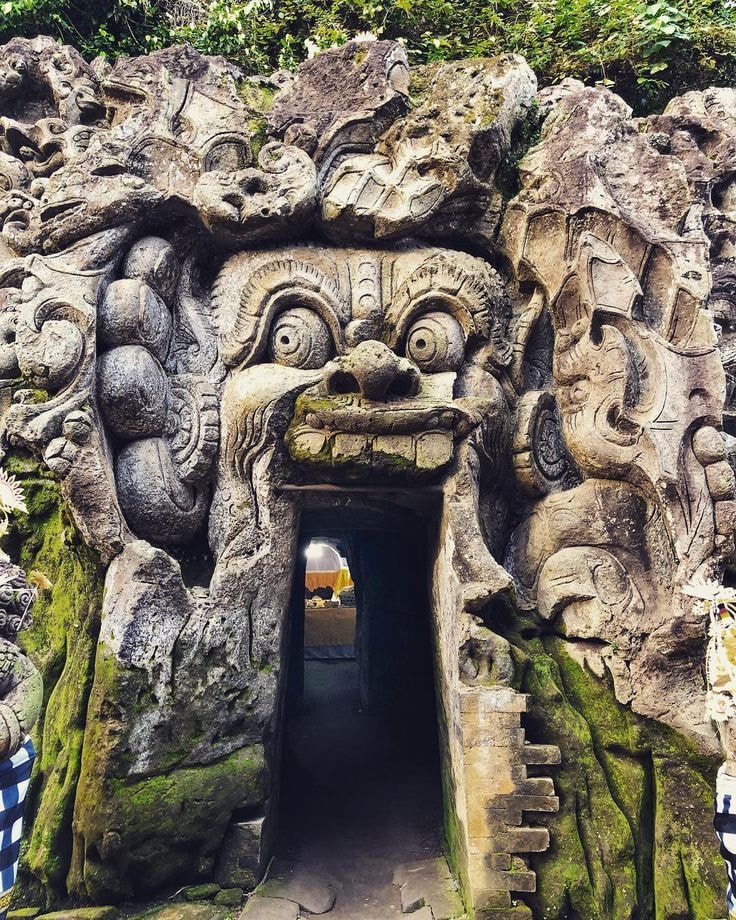
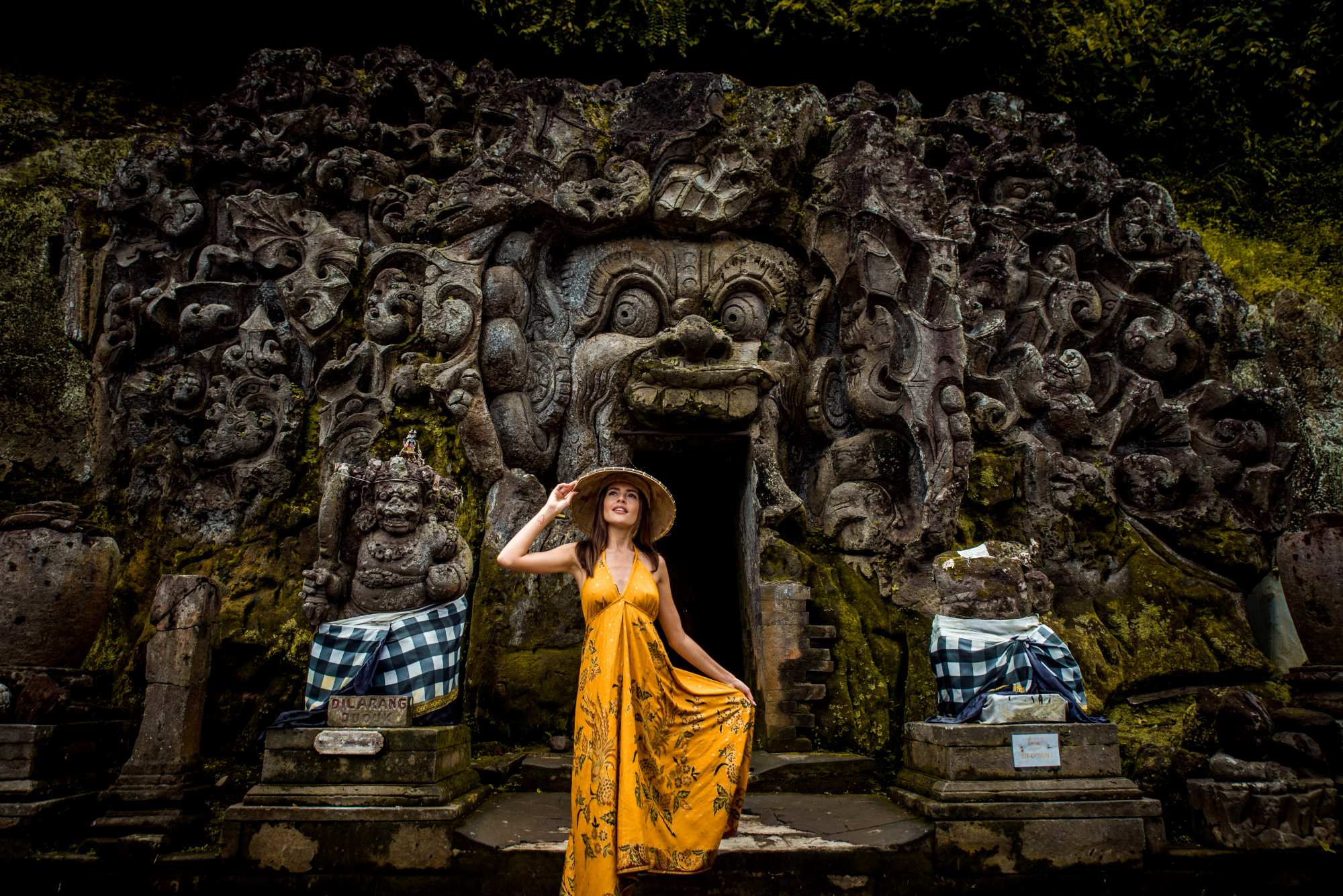
The cave entrance is the most recognisable part of the site, carved into a stone face with wide eyes and an open mouth, which is believed to keep all the evil spirits away.
It looks dramatic and slightly mysterious, and most visitors pause here before stepping inside to really pay close attention to all the intricate carvings.
Inside, the cave is narrow, dim, and simple (you can see why this place was good for meditation).
It is very small, and there is not much to see. Slowly move around to see small shrines, Hindu incense baskets with incense burning, cave’s walls carved with ancient inscriptions, Shiva’s lingams and yoni symbols, and the Ganesha statue – the main attraction here.
The Holy Bathing Pools
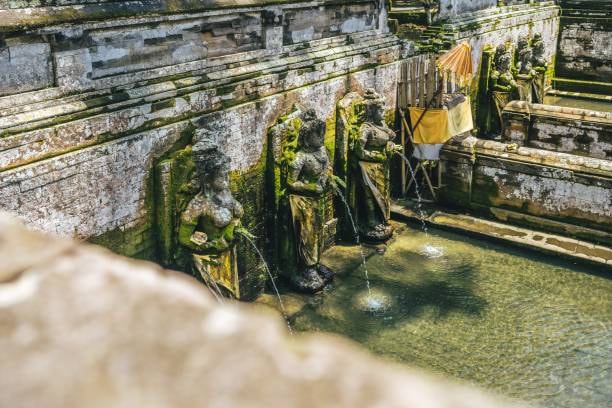
Below the cave, you can find the holy bathing pools, where stone spouts pour water into rectangular basins.
These pools, supplied by a holy spring, were rediscovered in the 1950s and are believed to have been used for purification rituals by Balinese people (melukat).
This area feels more open than the cave entrance. The sound of holy water and the surrounding greenery make it a good place to just unwind!
In the courtyard of the temple complex, you will see 6 remaining statues of Balinese women holding a water jar.
There were initially 7 of them, each representing one of the seven holy rivers in India: Ganga, Sarasvati, Kaveri, Yamuna, Godavari, Sindhu, and Narmada Rivers.
The Lower Garden & Archaeological Park
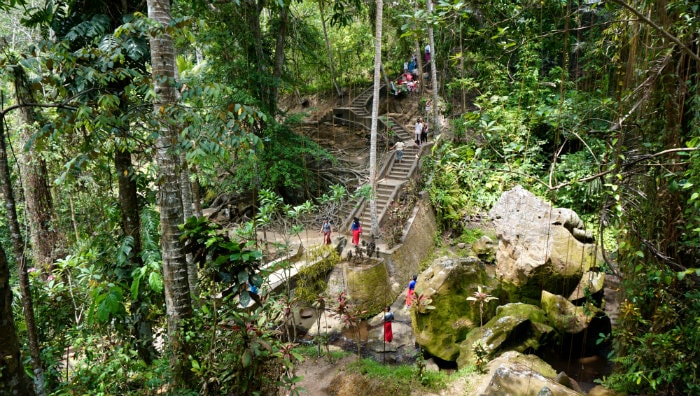
If you follow the stone steps down, you will end up in the lower garden area, locally known as part of Taman Purbakala Goa Gajah, or the Goa Gajah Archaeological Park. This section is easy to miss, but it’s one of the calmest and prettiest parts of the site!
Surrounded by tall trees, mossy stone walls, and a small river, the temperature drops and the crowds thin out.
Many believe this area was used by Hindu priests for longer spiritual meditation retreats.


FAQs
Is Goa Gajah Worth Visiting?
Yes! If you are a history buff, love Balinese culture and are looking for unique and interesting places to see around the island, the Goa Gajah Temple is a must-see historical site with both Hindu and Buddhist imagery.
It was a candidate to be included in the UNESCO World Heritage list and is anyway on your way to some must-see waterfalls around Ubud, so why not stop by?
What Is The Dress Code For Goa Gajah?
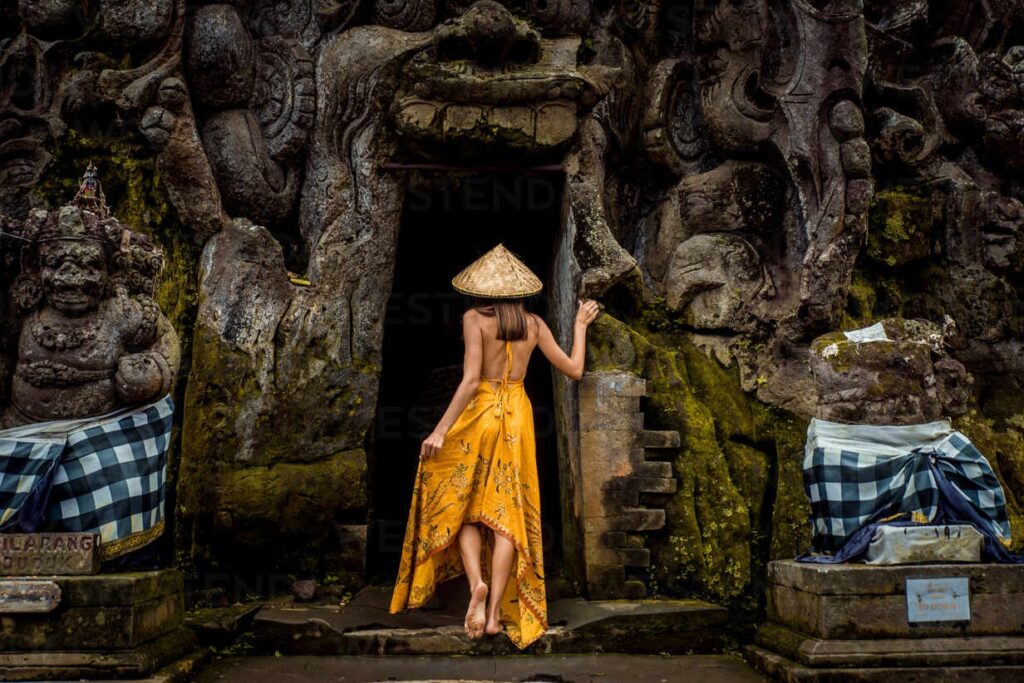
Goa Gajah is still an active temple, so you are expected to dress modestly. Shoulders and knees should be covered, even if you’re just walking around and not entering the cave.
You will be given a sarong, so you can tie it around your waist before entering.
If you want to get to the lower gardens, wear proper shoes with a good grip, as the paths and steps can be uneven and slippery, especially during the rainy season.
Is It Goa Gajah Or The Elephant Cave?
It is both! The name Goa Gajah is simply the Indonesian words to say Elephant cave.
Is Goa Gajah Free?
No, you can’t enter Goa Gajah temple or cave for free. There is a cheap ticket you need to purchase on site (bring cash).
How Long Do You Spend At Goa Gajah?
You can see everything at the Goa Gajah temple in about an hour. It will be slower if you take a guided tour, as they tend to really go step by step with the process.
Goa Gajah also pairs well with other nearby sites. Tegalalang Rice Terrace is a natural beauty of Ubud. Pura Samuan Tiga is close by and offers another perspective on ancient Balinese spirituality, while Yeh Pulu Reliefs provide a quieter, less-visited cultural stop.
Final Thoughts On Goa Gajah Temple, Bali
Goa Gajah Elephant Cave Temple is a perfect tourist attraction around Ubud to do in a day, without rushing, to disconnect from the busy city centre and slow down in nature while exploring Balinese culture deeper.
Filled with Buddhist relics and with the presence of the Hindu God Ganesha, this Hindu-Buddhist temple is one of the hidden gems of the island of Bali.